
Robert De Niro was once asked about his acting and where he got all his inspirations from. His reply was, as I remember it: "I steal. All the time. I see a bit of great acting, I take it." He explained that this wasn't about copying or imitating. The moment he saw something brilliant, he began to work it until it became a part of him. By doing so, it became a new thing, an original thing, a De Niro thing.
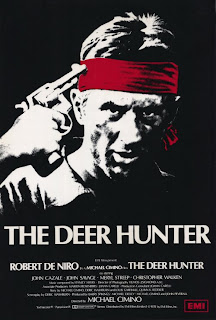 |
| Good Russian Roulette inspiration |
Let's stay with Robert De Niro for a moment. The man may say that he steals - but he's De Niro. He's clearly a man at the very peak of his craft - a master of his trade. So don't think "stealing" is easy - here are the three things that can happen when you do the "stealing" bit:
- It morphs into something new. You've taken the essence of another film's moment, twist, etc. and, because you've brought it into your world, your characters, with your style/voice, it's unrecognizeable from the original. That is what you want to shoot for.
- It becomes an homage. You've seen this a million times. A famous moment is incorporated into another film in ways that keep it recognizeable. Some of these work - on a whole, however, try to stay away from those. An homage is an intellectual moment - the audience "gets it" and that moment takes them to a different movie - hence, out of your story, even if only for a moment.
- It remains a copy. Bad writers will try to sell you those as "homages". But seriously now, if the reader turns up his nose because it reeks of imitation, then it probably is.


No comments:
Post a Comment