19 February 2011

You may just have what it takes, if ...

What does it take to make it as a screenwriter? And by "making it" I don't mean being on the A-list, but simply making a living as a writer. Once you're there, you can tackle the next challenge.

Think Indy - screw the odds.
Well then, what does it take? There are the main four, of course - stamina and discipline, craft and talent. But in the age of Twitter, we like to bring things down to the "140 or less", don't we? So I've bundled a few of my tweets on the subject (listed in no particular order).

You may just have what it takes if ...
  • ... you get cranky when you don't write.
  • ... a decade worth of rejection doesn't stop you.
  • ... you write and cry with your characters.
  • ... knowing you're alone on the planet, you'd still write.
  • ... it's about your life-long passion for writing.
  • ... there's no chance in hell but you write anyway.
  • ... rejection doesn't make you bitter, but stronger.
These are just a few lines and they can either encourage or discourage. They can show that you're on a potential path or that you might want to do something else instead of screenwriting. Those eight lines are essentially about the passion and the odds. But always remember that networks and production companies are factories - they need to produce. And that's why writers "make it" all the time.

Yes, those damn odds are stacked high against every single one of us. But if we defy the odds with our very passion, chances are ... !

10 February 2011

"Even A-list writers write crappy first drafts." Really?

The title line was a comment I recently came across … and I couldn’t disagree more. A-list writers deliver, they know the craft. Of course their first drafts are not the finished products - but they will, at the very least, already be well crafted. An A-list writer does not deliver “crappy” anything – he’d be off that list in a heartbeat.

Guess who's on top - yep, Salieri.
Remember Amadeus, Milos Forman's 1984 film about Mozart? Just as there is a huge difference between a novice musician and Salieri, there’s another leap from Salieri to Mozart. Antonio Salieri was an accomplished composer. He didn’t have Mozart’s genius – but he was a hardworking craftsman. And that is exactly what most professional screenwriters are – Salieri. They know the craft, they live the craft, they understand the craft. They know what works and they know what doesn’t and they deliver good work from the get-go to the shooting script.

See? I wrote “good work” – not “brilliant work”. There will be strokes of brilliance along the way - and there will be the rare Mozart among screenwriters. But most professional writers – all the way to A-list levels - will be Salieri (with an occasional lucky measure of Mozart thrown into the mix). Beginning writers often seem to forget that screenwriting is a collaborative craft. Trust me on this – the producer will want to work with a reliable Salieri, rather than a capricious Mozart.

The Salieri-type writers deliver on time and deliver well crafted. And, together with the various partners (producers, director, actors, etc.), the Mozart-ian flashes of brilliance will flow into the collaboration that’ll end with the creation of a great film. So, to come back to the title’s claim  – do A-list writers deliver crappy first drafts? Hell no.

09 February 2011

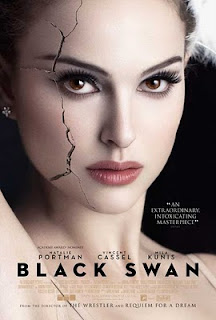
"Black Swan" is excellent ... so why didn't I care?

I saw "Black Swan" last night. This then isn’t a review - there are plenty already - rather, it is an excursion into character, into protagonist. This post is about a film that was truly stunning in many ways … but frankly, I couldn’t have cared less about Natalie Portman’s character … now why the hell was that?

I so wanted to care ...
A beautiful script is brought to life by a very creative director and an actress who deserves the Oscar for this role (and she’ll win, without a doubt). There’s lots to admire, down to the very clever use of mirrors, the schizophrenic and horror moments, the camera work, the sound and special effects, the transformation and and and … so why didn't I root for the protagonist? Am I a cold-hearted sob ... or do I simply hate ballet? Nope – as mentioned before – I love good stories of any genre and Black Swan is without a doubt a good story. As for cold-hearted – heck, I still cry when Harry runs to Sally in the end!

Usually, I have a great sense for film. My two sides - writer and audience - are perfectly attuned. In a good film, the audience in me takes over 100% - I couldn’t care less about analyzing then – I’m just happy to be in whatever world I’ve been allowed to live in for a while. When a film is flawed, the writer takes over instantly and analyzes the shit out of everything. I have great fun doing that, too. So then, generally, good film or bad film, I win – yes, I can have the cake and eat it, too. So what happened with Black Swan? I don’t have a definitive answer – and that bugs me.

Natalie Portman plays Nine Sayers, a ballerina about to become a prima. She has everything you’d want in a protagonist. She has all the odds against her, obstacles from within and from without constantly mounting. She has a powerful goal, she has a Mommie Dearest mother to rebel against, a callous director to contend with, a jealous group of dancers ready to trip her. On top of all that you have Natalie Portman! She looks so beautiful, so vulnerable, so in danger … you’d imagine, with all of the above, you’d be on the edge of your seat for Nina Sayers – you’d be rooting for her, hoping for her, fearing for her… did I? Nope, not an ounce of emotion. Here are the probable reasons:
  • Nina is a miserably weak person for most of the film – it's hard to root for someone who continues to get pushed through the story by everyone, including her schizophrenic self.
  • Nina doesn’t have a strong antagonist. The director? Hell no. So he’s not the nicest guy around – but he’s not vicious - on the contrary – he wants her to succeed. Her overpowering mother then? Nope – the mother’s a Carrie-like cliché – that mother, if anything, makes Nina’s character even weaker.
  • The antagonist then truly is Nina herself – which is beautifully in line with the whole white-swan-black-swan theme of doppelgangers, mirrors and overall schizophrenia. But that, in fact, makes her overall character weaker still – all the less we can root for her.
There is much to admire about this film then - but in the end, if I don't FEEL, I don't care. I found much of it fascinating - but I watched it all from the outside in. The film's many brilliant elements (and the all-but-certain Oscar for Natalie Portman) make it worth seeing - but essentially, to me, it was a masterful mind-fuck exercise ... that could have been a powerful drama.

07 February 2011

Not every question is worth asking

We tell our kids that you can, and should, always ask. Be inquisitive. Learn. Questions don’t cost anything, we tell them. As someone just starting out on the life-long screenwriting journey – the same does not apply. Certain questions will most certainly cost you.

"Lazy" won't get you there.
You’ll probably want to know which questions you should avoid.  That’s simple and obvious enough – don’t ask any questions about anything you can easily find in the many how-to-write-the-brilliant-screenplay books. Seriously – think about your question before you ask – for one simple reason – the question will say something about you. It will hopefully reveal a passion for screenwriting. It will ideally show that you’ve immersed yourself already.

… and it will hopefully not tell the long-time writer you’re talking to - or your forum friends who take it seriously - that you’re just plain ole lazy. It shows a total disregard for the craft and for every writer who’s analyzed shitloads of films and scripts, who’s slaved through countless drafts and production meetings and starved through the hunger years. Think about it: If you ask a pro to explain the three act structure – what does that say about you?

But ask you shall! Ask smart questions and if you must go on about the three act structure, then show you’ve done your homework. Try something like “In your film X you did something funky in the third act. Could you explain why you’ve done it that way?” Ask away, by all means. I love questions – but they better not be about definitions of this or that. The “lazy questions” out a newbie as someone who thinks screenwriting is easy. Pick up a few pointers and off you are on the road to your first Oscar! The truth is that you’ll need to learn the craft and you need to develop discipline and stamina to make it … and a bit of talent won’t hurt, either.

Screenwriting is not easy and there are no – ZERO – quick fixes. Better be in it for the long haul, folks!

05 February 2011

Screenwriting in the iPhone world

Damn. Remember when Sandra Bullock was caught in The Net? Recall when Will Smith was the Enemy of the State? Protagonists hunted by new technologies ... it all seems so quaint now. We screenwriters face a much bigger challenge these days - the iPhone challenge.
For the story's sake - pre iPhone

The iPhone with its apps technology is more and more pervasive - it's everywhere. And just as stories had to adjust to the advent of the car, the telephone, radio, televsion, video technology ...iPhone technology forces us to tell our present-day stories differently. David Fincher talked about his Hollywood take on the "Girl with the Dragon Tattoo" and decided the story would be pre iPhone technology. Lisbeth Salander, the lead character, is a brilliant hacker and would definitely have the latest and best technology - and her having iPhone technology would have meant her knowing too much at various stages in the story.

With an iPhone everything becomes more immediate, more apparent, more obvious. You use instant messaging, social media, compass functions, mapping, tracking, filming, camera functions, voice recording, travel, searching, finding, tanslating, etc. etc. - if you can imagine it, the app for your idea is probably already on the market ... remember the above Enemy of the State? Back then only super duper spy cracks had that sort of stuff - today more and more average schmoes like you and I have just about EVERYTHING in the form of an app in our pocket.

If you write a present-day story, you have to think about iPhone stuff. No way around it anymore. At every corner of your tale you need to think about plausibility - wouldn't he or she have an iPhone? And if not, why not? Do they live in the country? Are they poor? Is it broken? And if they have one then the questions are - wouldn't they know certain things? Wouldn't they have connected already? Wouldn't they have done this or that with the help of an app? I'm not saying stories will change dramatically - universal tales will continue to be told. But I bet if you'd do Shakespeare's Romeo and Juliet today - it would include iPhone technology and would be quite a bit different from the 1996 version with Leonardo DiCaprio and Clare Danes.

Makes me wonder whether more directors will choose to set their stories in pre iPhone times... as for me personally, I'm quite aware that some of my spec scripts would need some serious rethinking to fit into the present technology times... and maybe, maybe I'll just become a retro writer and focus on 40s film noir or 70s paranoia and cold war thrillers - you know, the good old quaint pre iPhone days.    

02 February 2011

Your script’s perfect length

Odds are your script's too long. You can always tighten some more, but at some point you need to get that story of yours into the hands of others. So face it, it’ll never be the perfect length (same as it’ll never be the best it could possibly be).

Don't try to get this through the door as a novice.
The right length for a Hollywood script is below 100 pages. Lower than 95 and higher than 110 smacks of amateur. We can argue the numbers but it's in that ballpark. It's not fair, sure - but get over it. Your script will make its way into a reader’s hands who’ll start by looking at the number on the last page (plus formatting and spelling errors).  If you’re new to the game, get those right. You want the reader to read your story, right? If you disregard the above, chances are he/she will toss your script – they have better things to do than wasting their time on what they'll perceive to be an amateur.

Now in a perfect world those readers would be benevolent angels with unlimited time on their hands and they’d read everything regardless of pesky little length/format/spelling issues. They would focus solely on your story and would surely discover the amazing tale you’ve woven in your 120 page script. But that’s just not the way it works. There are barriers, filters, hurdles, doors – when starting out, you need to do everything in your power to get past those barriers to qualify for even the smallest hint of a chance.

So how then do you cut a great script down to size? Unfortunately, it'll probably entail some of that dreadful “killing your darlings” bit. But wait! Before you do that ... when I read scripts I often find that I can easily cut up to 10 pages by simply applying the crisp screenwriting style we should all live and breathe. Easy examples are: 
  • cut everything that won’t be seen or heard on the screen – how often do you read stuff like “Joe, the long-lost brother of …” Cut it, you’ll reveal that in the story.
  • slash everything that  smacks of exposition – show, don’t tell.
  • and slice everything that can be condensed – things like “The night is dark, the fog creeps in eerily, the tall willows sway ominously in the wind. Joe looks around nervously…” instead try “Blackest night, it couldn’t be creepier... “ 
More often than not we write too much - because we’re an insecure bunch. We’re afraid that the reader won’t get it, won’t see the moment, won’t understand our passion - unless we really hammer it all home with extra lines. But that’s just it – it’s our own insecurity and it’s up to us to deal with it. Trust me – readers CAN read – they’ll instantly spot and appreciate crisp writing and yes, they WILL get it if you’ve done your homework.

I love cutting. I love the challenge of condensing a two para line into a high-impact five word sentence. If you do that – if you go over your script with that cutting drive, you’ll be surprised just how many pages you’ll be able to shave off your script. Well then – if you’re at 120 – try the above "easy ways" before cutting story elements – you may just find that you won’t have to kill all of your darlings.

01 February 2011

Relax - it's not about the pitch

Pitching is a huge topic for screenwriters - and we generally like the idea of pitching about as much as spending quality root canal time at the dentist's. Fear of pitching is like stage fright - as soon as you start doing it, it usually disappears. Then there are the tricks, of course.

Relax Arnold, I'm not pitching ... yet.
Some say that pitching's an art. They'll tell you stories of screenwriting careers made and destroyed with a single pitch. There's books about pitching, there's workshops, seminars - there's much to be learned ... and there is really nothing to be feared. If you think your only chance at a big break rides on your one pitch - on your one lucky moment with a producer - well then you're screwed. Nothing should ever have that level of importance - don't let it - it'll cripple you.

When it comes to pitching, you damn well better learn all you can. Pitch your wife, your grandmother, your children, your neighbors, your friends and the cab driver. Study their reactions - figure out what works, what doesn't, figure out why. Learn about loglines - get to the essence of your pitch - learn the short and long version, memorize it if you can. Now before your meeting you'll also have done the obvious: You'll have researched the company and you'll have more than one pitch ready for the moment they throw you a curve ball (and that moment usually does come).

But when the meeting actually takes place - the most important thing is this - RELAX! I realize that's not always all that easy (I mean heck, it could be Steven Spielberg sitting across from you, right?!) But there are a few things that will help you relax and settle into a casual conversation:
  • The folks sitting across the table from you are about as human as you are. It's just talking, nothing more.
  • Let them talk, let them lead, let them tell you about things. If you just sit on your mouth, they'll do the talking for you.
  • When you do talk - don't barge in with your pitch, don't prematurely ... you get the idea. Just be yourself, talk about them, yourself, movies, the weather, whatever - talk about everything BUT your pitch.
  • Follow their flow. If you watch their behavior and listen closely, you'll be pitching what's of interest to them.
  • "Needy" never flies. Make yourself believe that you don't need this gig and you'll be ever so much more attractive to your conversation partners. It also helps to realize that they won't go for your pitch anyway - so the pressure's off and you're free to just have fun in the room - and that is highly attractive.
It really helps to remember that the meeting is never about your pitch - it is about expanding your network. Will your pitch fly? Most likely not - but you've just met some hopefully pretty cool people, you got along, you exchanged numbers, you yacked film and you'll keep in touch ... and somewhere down the line you'll hook up again and work together on something entirely different... just because of a pitch meeting way back when that was not about the pitch.