26 April 2011

Got a brilliant idea? Don't hide it - use it!

You have that perfect idea - worth Oscar gold! So you hold on to it, you perfect it, you wait for the right moment ... chances are, that moment will never come. Here's my experience, my bit of learning: Do-not-wait-for-Hollywood.

You make it happen...
... by using your brilliant ideas.
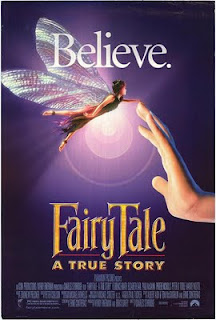
Yes, I know - those one-in-a-million success stories do happen. Yes, I know - fairy tales can come true. Yes, I know that you know that, too. Besides, you're a dreamer - you've become a screenwriter after all - a good part of you needs to believe that miracles do and will happen... but your chances of them ever happening increase tremendously if you don't hold back on your brilliant ideas.

Alright, so you have that amazing idea, unique character, fantastic plot. Your first thought is to protect it as if it were your own baby (and that's exactly what it is, right?). You want to nurture it, you want to watch it grow, you want it to live that fairy tale. And you most certainly do not want to waste your baby on a student film, a TV episode, a MOW or a small indie feature.

I used to be the same way when I started out. It's entirely natural. But learn to use your ideas instead of keeping them hidden away in the dark recesses of your twisted screenwriter mind.

Your ideas are - first and foremost - steps on your way to becoming a pro. You need to actually make those steps.

If you make the mistake of saving them for the time when you may have become that pro - chances are, it'll never happen in the first place. Again, do-not-wait-for-Hollywood.

Another great bit of learning is that ideas will keep on coming. Learn to trust that. Over time, they'll flood your notebooks and your hard drives. So use your brilliant ideas. And when the time comes, when that Hollywood door actually opens, you'll be there with all the ideas and all the confidence you need to succeed.

24 April 2011

The gun in the drawer

When you start screenwriting, you read a lot about rules. To me, as someone focusing pretty much exclusively on thrillers, a few of those rules are simple and powerfully strong foundations of my craft. Thought I might share some of them - here's the one about the gun in the drawer:

Go ahead, Harry, use the gun.
If you show the audience a gun, you absolutely must use it.

Totally obvious, right? In any dramatic tale every single element of the story is there because the story wouldn't work without it. It's the usual - only keep what's absolutely necessary. Oh, by the way, the reason why I refer to "dramatic" tales above is simply because the same rules don't necessarily apply in comedies where you may go screenwriting-nuts in altogether different ways.

Back to the gun in the drawer. Act I - someone opens the drawer, the audience sees the gun, that someone closes the drawer again. The audience will, consciously or subconsciously, remember it. The audience knows that whatever has been shown, has been shown for a reason. Always remember that when you write your scenes. My example is that one with the gun - but your "gun" could be anything, of course. A side remark, a frown, a glance. Is what you're writing - what you're showing the audience - essential for the story? And, if your particular "gun" is indeed essential - are you making original and inevitable use of it later in the story?

Here's the rub - you may think you can get away with tossing in a bit of cool stuff for the fun of it - but if that cool stuff is not essential - trust me, your audience will notice and your audience will not be forgiving. So remember the "gun" rule. If you show it, you must use it ... and when you get to that glorious moment of using it, don't forget to be creative about it!

03 April 2011

Write it down, damnit!

Relax, I’m mostly shouting at myself here. But maybe it happens to you, too. Do you write down your thoughts – all of them? I’d love to hear how you go about it.

When the muse kisses you, take note(s).
You're a screenwriter - even if you’re not consciously thinking film, it’s always there. You’re shopping for a pair of new shoes and suddenly great visuals flash across your inner eye. You’re playing with the kids and “bam!” – great snippets of dialog pop into your head. You’re walking the dog and, while in the middle of the forest, entire plots explode in your brain.

There are those of us who carry the classic Moleskines around with us wherever we go. There are those who have bought a snazzy pocket-sized tape recorder at some point in their writer’s life. And there are more and more of us with iSomethings to record every bit of writorial inspiration.

Well... I've used Moleskines and they're surely still looking classic - wherever the hell they may be (and there are no doubt some real idea nuggets in there, too). As for the tape recorder - it's collecting dust - together with a dozen or so of those tiny tapes and dead - probably leaked - batteries. I never liked carrying that thing around with me anyway. And the iPhone? Yeah well, I've arrived in the iWorld - but I haven't recorded a single idea yet. To add to the joy, I have a lousy memory - which may be why I became a writer in the first place. From kindergarten onwards my mother made me write down everything I needed to remember. On that note - thanks, Mom!

Write down EVERYTHING


Or record or whatever else works for you. Being a writer, though, not very surprisingly, writing things down still seems to work best for me. Sometimes the muse will rock you and sometimes she will just give a a passing peck on the cheek - but even the tiniest contact with the muse should be noted and stored. I'm not yet half diligent at this as I hope you already are.

Mind you, even though I don't put to paper half as much as I should, I still have drawers full of ideas - but I could have ever so much more! Will you be able to use every idea? No - at least not directly. Most of your ideas will not end up as a film or even as a line of dialog or character quirk. But if you revisit your notes occasionally, they will become part of your writer's brain, they'll feed your new creations, they'll fertilize creative dry spells and they become a highly useful part of your tool belt in pitch meetings, too.

How good are you at writing things down? How do you tick?