27 January 2012

On women screenwriters

I love movies, I love stories - and I couldn't care less whether they were created by women or men. I just want good stories, period. Would seem obvious that, with greater diversity among screenwriters, we'd have a greater diversity in stories - so why are most of the best-known writers still mostly dudes? 
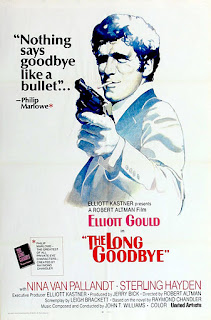
Yep, Leigh Brackett wrote this gem, too!
Is it good old gatekeeping of the male elite in Hollywood - the same bunch who hasn't really been particularly embracing of black screenwriters? Or is something else at work? Are men better story tellers? I'd never buy that in a million years ... are men better salespeople, then? Do they have a better way of presenting their ideas, their pitches, themselves ... is "selling" (of self and story) the big hurdle?

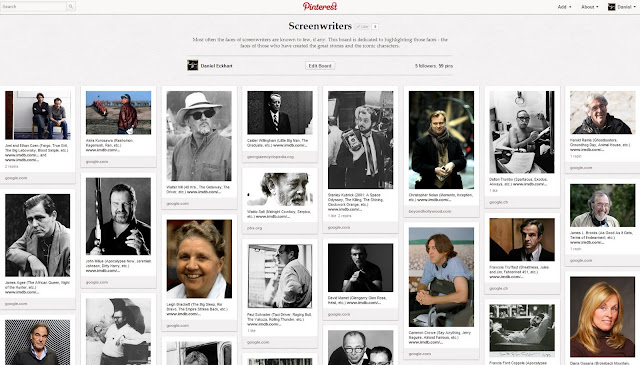
I got onto this subject because of Leigh Brackett - actually, because of Pinterest, a new social website where I've created a pin board with images of screenwriters through the decades - the faces that have created many of the most iconic of films ... In my hunt for female screenwriters I had of course instantly pinned Nora Ephron, Diablo Cody, Callie Khoury, Susannah Grant and Diana Ossana ... there are more, of course - but the numbers are ridiculously telling in favor of male screenwriters. 

I've just added Leigh Brackett - who was apparently brought on board for The Big Sleep by Howard Hawks sight unseen - he knew her name, read her novel - and had assumed Leigh Brackett to be a man. It was the beginning of a Hollywood partnership that brought forward gems like "Rio Bravo". Leigh didn't focus on Hollywood, but instead on her sci-fi novels (which landed her the gig for "The Empire Strikes Back" - I know! What an amazing screenwriter, right!?). She clearly was her own woman, didn't allow Hollywood to dictate, did her own thing. Is that the way toward more successful women screenwriters? Do your own thing, don't depend on Hollywood, be in it on your own terms?

Hollywood is a business - and Leigh Brackett was unique in many ways. If we, both male and female writers, want to make it in the film business we need to treat it as such and learn to play ball - i.e. become a part of the business. And that means learning to shoot the shit - to not just sell a story, but sell yourself as best you can in that room.

On this topic, Sheryl Sandberg, COO of Facebook, gave an excellent TED talk: "Why we have too few women leaders". She makes three excellent points: 1 - Sit at the table, 2 - Make your partner a real partner, 3 - Don't leave before you leave. Watch it. Then change the title of the talk from "Why we have too few women leaders" to "Why we have too few women screenwriters" and watch it again. Getting there ain't easy - but it is as important to women screenwriters as it should be to Hollywood.


24 January 2012

The faces behind the stories

Most often the faces of screenwriters are known to few, if any. I've played around with Pinterest a bit and have put together a screenwriters board.

Basically, all you do on Pinterest is creating pin boards and stick up pictures about whatever you're interested in - in my case, screenwriting, of course. This board is dedicated to highlighting the faces of those who have created the great stories and the iconic characters.

Below a current screenshot - click here to visit the board on Pinterest. Feel free to suggest other writers - the board will continue to grow, of course! And maybe, just maybe, one day our faces will make it onto that board, too :-)


21 January 2012

Screenwriters - obscure no more!

We're screenwriters, we're the unknowns, the ones whose faces no one recognizes out there, the ones whose names most often don't make it into the news ... and, who's kidding who, for the most part we're very happy with that obscurity.

I went through a fulltime graduate acting program, two years of roaring intensity - and yet when I discovered screenwriting, the thought of acting didn't even pale compared to it - it evaporated. Who needs fame when you're God, right? We're the creators - we make stories.

But our love for sitting in our writing caves aside - we should never forget that we're not in the arts, we're in a business - we're not in the clouds, we're on the ground that there is called film industry. And in this insane business of ours, networking and presenting, in their many forms, should always get a solid chunk of our attention.

Yes, you may get lucky just on the merit of your first script. But don't hold your breath. Chances are far greater that your name pops up in certain circles if you're running a blog (and have been consistent and relevant in doing so), if you're networking in social media with your peers (not the high-flyers - but actors, directors and producers on your level) and if you're promoting your work in any way you can. If you find your work is barely mentioned, try to dress it up, add links, images, trivia, etc. Perception does matter.

Case in point - all of my produced work so far has been in television - where traditionally they're a bit slow in updating IMDB (if they do it at all). So instead of leaving it as is, I just get into it myself and do what I can to make sure my work shows up and is presented attractively. Whether it's IMDB or Wikipedia, Facebook or Twitter, Blogger or Wordpress - there's a ton you can do and most of it is easy to handle.

How obscure you are is up to you - but if you want to be an active (and I mean commissioned) member of this business, you may want to check where you can improve - and then snap to it. 

16 January 2012

The 1991 Katzenberg memo

In January 1991 Jeffrey Katzenberg, then head of Disney, wrote a memo to his executives. It's a well written piece, definitely worth reading - here it is, 28 pages worth. By the way - this memo was apparently Cameron Crowe's inspiration for Jerry Maguire and his mission statement.

Katzenberg: "Magic is the key".
Below just one section of the memo - yep, you guessed, the section on writers. I like what Katzenberg wrote - I like the idea of long-term relationships as opposed to an unhealthy spec hype system. Some of the greatest films ever made were made by writers employed by studios - they got x-dollars per week, an office space and a typewriter on the studio lot and they typed away - one story after the other. Those writers worked their writing muscles in ways writers rarely do today. Not all was gold then, agreed, but it's still worth reflecting on.

Below the part about the writers. "Getting writers who can tell the stories" (for the complete memo go to "Letters of Note" where you'll find the original memo and, scrolling down, a complete transcript - makes it an easier read. Great work - great read!): 

"Getting Writers Who Can Tell the Stories

One reason for our quick and early success upon arriving at Disney was that we established a stable of writers under long-term contracts. These were talented individuals whom we could work with and who felt they had a stake in this studio. Just as our marketing division’s success is in part attributable to the fact that the people there are part of the give-and-take of the ongoing creative process here, so, too, did this group of writers that was integrated into our operation function particularly well.

Now the stable is nearly empty. We should fill it again.

I know that many will argue that this just isn’t feasible anymore. Agents won’t let their clients sign long-term contracts because the spec script market is too lucrative.

All this means is it will be tougher. It doesn’t mean it’s impossible.

We need to somehow find the writers and convince them that an association here is in their interests. And this may not be as difficult as it seems. If and when the $3 million dollar scripts turn into box office duds, the speculative bubble will quickly pop and long-term contracts at a stable studio will regain some of their lost luster.

But we shouldn’t wait for this to happen. All the big time writers have one thing in common. They were all once unknown and thrilled just to make a sale. The future big time writers are out there and would be grateful just to be considered by our studio. To find them, we have to search harder, dig deeper… and be there first."


14 January 2012

The treatment and why you need it

A treatment is many different things depending on who you talk to. Essentially - ask what the producer's understanding/want is - and then deliver on that. Here's my take on the variations and handling of treatments.

Relax - it's not shock treatment
Some people don't do them - they prefer "going with the flow" of a first draft. If you're writing a spec, be my guest and do as you damn well please (although, personally, I consider that foolish). But if you're commissioned, you definitely do not want to head into the script stage without a treatment. A treatment is an absolute must.

A treatment is assurance. For your employers, a treatment is an important check mark, it gives them the sense of security they need, it tells them that everything is going in the planned direction. For yourself, a treatment is just as important. From a craft point of view it allows you to structure your work with guiding posts. It allows you to see the forest before losing yourself in the beauty and the density of the trees. From an employment point of view a treatment saves you work, pure and simple. Without a treatment, you'll spend months on a script that may turn into something completely different from what your employers except - and you'll end up going back to square one (unless, and that's the more probable option, you're fired).

Now what the hell is a treatment, you wonder. Truth is - there are variations (in page length and content) depending on where you look - and that's because there are different countries, cultures, systems and people. Here are the main forms:

  • Short treatment (up to 15 pages) - this is basically a selling paper, a proposal in prose - giving the reader the story with all major plots points and characters.
  • Presentation treatment (up to 25 pages) - goes into more detail than the above, may also use bits of dialogue to highlight elements, generate excitement.
  • Scenic treatment (up to 40 pages) - delivers a scene by scene layout of the movie - every scene still told in prose form.

Again - don't drive yourself nuts. As mentioned above, if you work on a spec - just choose what works for you and if you're employed, ask them what they want and then deliver exactly that.

A final word for those who say "I don't write treatments because they limit my creativity." That, I'd say, is how only an amateur would argue. The fact of the matter is - a treatment is there to help you, not hinder you on your path to a great script. A treatment doesn't lock you in, it guides you. And, the beauty is, a treatment is NOT WRITTEN IN STONE. Creativity happens as you take it from treatment to script - you'll discover new things along the way and those flashes of movie magic will happen because of the treatment, not despite of it.