27 December 2010

Get out of your cave!

My cave is my castle. It's home, it's where I create, where I percolate and procrastinate, where I can write whatever the hell I want and NO ONE messes with a single word I've put to paper. I love the solitary element, I love being on my own, in my cave, the hermit in charge ... but all of that glory doesn't get movies made ... if you want to be successful, you need to get out there and you need to get good at being out there.

You don't have to sell your soul out there.
Outside your cave there'll be sabertooth tigers just waiting to tear you to shreds. So yeah, it's scary out there ... but only until you develop strategies, sharpen your weapons and summon up the necessary guts. Some say that a hefty 50% of your writer self should be out there living the life of a salesman (check out Tom Browne's post on shared abilities by screenwriters and salespeople). We can argue percentages, but the simple fact is that you won't make it until you learn to sell what you've got to offer.

You're a screenwriter and that means you're in a tough business, the odds are stacked against you. Any sane person will tell you to move on. But you're NOT sane. You are a dreamer, you are a weaver of tales - you don't think the way the pragmatic world outside the cave does. But you do need to make those two worlds meet. Done well, this will actually be fun, productive and creative. Here are just a few things that'll help you learn to make the most of the world outside your cave:
  • Learn to pitch: Attend pitching workshops, and screenwriter conferences - learn the basics, then use your friends, family, colleagues and the guy on the bus sitting next to you. Pitch your stories, all the time. Learn about loglines and learn about extended pitches. Over time you'll develop the necessary confidence and clarity.
  • Learn about the business: Get to know the world out there. Research the people you plan to engage with. Who are they, what have they done, what do they love and hate? Where's their "in"? Prepare for meetings by anticipating questions and having your answers ready. Especially prepare for curve balls.
  • Learn about yourself: If you're introverted - get over it. This is as much a people business as it is a story business. Find ways to change, to cope. Ask others how they perceive you, how you come across. Make changes, smile more if you need to. Producers may be interested in your story, but you'll sink that interested by being a total stiff.
  • Get off your horse: You're not an artist, you're a craftsman and yours is not the only true voice. Be humble. Your story, your pitch, is just the beginning of the conversation - never the end. Listen to what your opposites say and weave it into your sale (if not your story). 
  • Promote yourself: Get yourself a website, write your own blog, connect with other writers, with directors' circles, with production companies - float your name, your passion, your expertise.
  • Never sit back: Devote a bit of every single one of your writer's days to selling. Even if it's only to connect with people via Facebook, Twitter, etc.
There's more, of course, but heck, it's a start. If you do all of the above, you'll be on your way to becoming a prime promoter for yourself and your stories and the magic just may happen. And yeah - you just may learn to love the scary sabertooth world out there.

22 December 2010

Genre writer or jack-of-all-trades?

You may want to write a romantic comedy, then a psychological thriller, then a family drama. If all of those feel right and if you're actually good at writing in those genres, or you just feel like exploring, then go right ahead and have fun! Write to your heart's desire in any world you choose ... but know that, as a fresh writer, you won't exactly increase a producer's faith in you.
   
It's Black, Shane Black, genre writer.
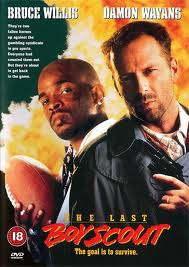
Let's face it - even when you're produced, when you have the successes to back you up, producers will still worry (it's part of their job description). Producers will always feel more comfortable with what they know (or perceive to know), with anything that, in their mind, minimizes their risk. Let's say you're the producer. If Shane Black drops "The Last Boy Scout" on your desk after creating "Lethal Weapon", you'll feel pretty damn comfortable. But if the Shane-ster comes to to you with a cross-country romantic love story that ends with Meg and Tom meeting at the very end on top of the Empire State Building ... you'll worry!

Producers want Shane to do the Shane thing, Nora to do the Nora thing and Charlie K to do his amazing whatever-it-is-he-does thing. That's the producer's comfort factor. We're all creatures of comfort, of course. So it should be easy enough for us to understand producers. Let's assume a producer is looking for a fresh voice, a strong voice - he looks for a brilliant, hungry writer to turn his idea into a thriller screenplay. Do you think he'll pick the writer who's written ten thriller specs or the one who's written one of every genre?

And if you argue that the jack-of-all-trades may be far more brilliant, that his thriller script may be the best by far, that the strength of his writing is clearly superior ... frankly, even then that writer will remain the tough sell - simply because he appears to be all over the place, he appears to be amateurish, he appears to still be searching for his true voice. Appearances matter. When that door opens, when the producer's ready to give you a shot, when the network calls, you want to be sure you look as professional as you possibly can ... identifying yourself as a crack in a particular genre definitely helps.

19 December 2010

Stealing allowed - De Niro style

Just as every musical note's been played a countless times, one may well argue that every genre, every scene, every moment and every emotion has been written, too. Just as composers keep finding new variations, new ways of arranging music - we screenwriters do the same with our stories. Just how original are we?

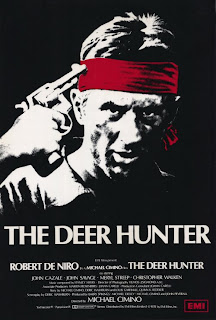
Robert De Niro was once asked about his acting and where he got all his inspirations from. His reply was, as I remember it: "I steal. All the time. I see a bit of great acting, I take it." He explained that this wasn't about copying or imitating. The moment he saw something brilliant, he began to work it until it became a part of him. By doing so, it became a new thing, an original thing, a De Niro thing.

Good Russian Roulette inspiration
That bit of "De Niro" thinking is hugely helpful - because it enables. Everytime the little man in your writer's head looks at what you've just written and annoyingly proclaims "It's been done! That ain't original!" - you can tell him to stuff it. Allowing yourself to take from the creations of others and morphing them into something new is incredibly empowering. It opens up whole worlds for you to pick and choose from. The world of film is your supermarket!

Let's stay with Robert De Niro for a moment. The man may say that he steals - but he's De Niro. He's clearly a man at the very peak of his craft - a master of his trade. So don't think "stealing" is easy - here are the three things that can happen when you do the "stealing" bit:
  1. It morphs into something new. You've taken the essence of another film's moment, twist, etc. and, because you've brought it into your world, your characters, with your style/voice, it's unrecognizeable from the original. That is what you want to shoot for.
  2. It becomes an homage. You've seen this a million times. A famous moment is incorporated into another film in ways that keep it recognizeable. Some of these work - on a whole, however, try to stay away from those. An homage is an intellectual moment - the audience "gets it" and that moment takes them to a different movie - hence, out of your story, even if only for a moment.
  3. It remains a copy. Bad writers will try to sell you those as "homages". But seriously now, if the reader turns up his nose because it reeks of imitation, then it probably is.
So steal, borrow - call it what you will - you're allowed. What you're not allowed to do is copying and imitating. Instead let yourself be inspired by every bit of movie magic out there - some of them may make for THE perfect moment in your own story ... and the beauty, no one will ever care or know where the initial bit of inspiration came from. Because you will have made it your own, with your own spin, your own hopefully inimitable voice.

18 December 2010

Write your story, don't direct it

When you get into screenwriting, you read scripts, often shooting scripts. And you'll find yourself bombarded with camera terms. Learn about them, by all means. Use the ones essential to telling your story - but for most camera terms, stay away from them. You write the story, let the director do the directing.

Write the chase, don't direct it.
We're writers, we think we're pretty good at what we do. Writing is our core, is what we're about. And although making films is all about collaboration, we all have our expertise. Just as we won't tell the make-up artists how to do their job on the set, we also shouldn't tell the director how to do his/hers - and when you use camera terms in your script, that is essentially what you do.

Every director I've worked with appreciates (and they make it a point saying so, too) the fact that I write the story without using camera terms. All we, as screenwriters, need to do is tell the story as strongly and clearly as we can. We'll also talk with the director, we'll go over the script, we'll answer any question the director may have. But it'll be up to that director to decide on a close-up, freeze frame, pan, split screen, etc. as the best way to convey the story on screen.

As mentioned in the intro, there are moments in screenwriting when you feel you absolutely have to use a camera term. The mention of a POV, for example, creates an instant strong mood. Just remember - always use camera terms sparingly and with caution. Same as you, directors don't want to be told to execute on what someone else has already decided upon. Same as you, they have their creative pride and their essential creative process.

So here's a glossary of camera terms - while you may not want to use most of them (you now know why) - they're still very useful to know:
  • ANGLE: The angle of the camera on the subject, as in Low Angle Shot, or High Angle (a bird's eye view). A Wide Angle Shot is one that includes the maximum lateral dimension of a scene.
  • CLOSE-UP (CU): The camera is very close to the subject. If the subject is a person, the shot includes only the head, or head-and-shoulders. It may be further defined as EXTREME CLOSE-UP (XCU).
  • CRANE SHOT: A moving shot taken by a camera that is mounted on a mobile lift, usually vertical.
  • CUT: The simplest transition between two scenes. One scene ends abruptly, the other begins. SMASH CUT is deliberately jarring or startling for dramatic effect. JUMP CUT skips ahead of time.
  • DISSOLVE (DISSOLVE TO): The slow visual melting of one scene into another.
  • DOLLY IN, DOLLY BACK: The camera, mounted on wheels, moves closer or further back from the subject. These can also be expressed as CAMERA IN, CAMERA BACK or CAMERA PUSHES IN, CAMERA PULLS BACK or TRUCK IN, TRUCK BACK.
  • ESTABLISHING SHOT: A general view of an a without selecting a specific subject. Usually used in connection with large areas (street, train station, etc.).
  • EXT: An exterior shot.
  • FADE IN: Shot changes slowly from darkness to a fully lit picture.
  • FADE OUT: The reverse of Fade In.
  • FRAME: A single rectangular picture on the developed strip of film.
  • FREEZE FRAME: All action seems to freeze, as though the film has suddenly become a still photograph.
  • FULL SHOT: An all-inclusive view of a person, place, or thing.
  • INT: An interior shot.
  • INTERCUT: An indication to alternate back and forth between two or more scenes, as in a telephone conversation (e.g. INTERCUT - JOHN IN OFFICE AND MARY IN BEDROOM)
  • LONG SHOT (LS): A view of people or things at a distance.
  • MEDIUM SHOT (MS): A waist-high shot of one or more people.
  • MONTAGE: An impressionistic sequence of brief shots, artfully blended to connote a passage of time, a stream of consciousness, etc.
  • PAN (PAN TO): Camera remains in the same location, but pivots from left to right or from right to left. A PANNING SHOT is a sweeping lateral view of a scene. WHIP PAN is an extremely rapid panning shot.
  • POV: Abbreviation for Point Of View. A POV Shot is one in which we see something through the eyes of a character in the story, as in JOHN'S POV.
  • REVERSE SHOT: If we are looking over John's shoulder at Mary, then suddenly we are looking over Mary's shoulder at Johne, we have taken a Reverse Shot.
  • SLOW MOTION: Everything seems to move dream-like at an unnaturally slow speed.
  • SPEEDED-UP MOTION: The opposite of Slow Motion.
  • SPLIT SCREEN: The picture is divided into two or more segments, allowing us to see more than one scene at the same time.
  • STOCK SHOT: A film sequence, shot some time ago, and stored in a film library for possible reuse in another film. This frequently refers to old newsreel footage.
  • SUBLIM: A very quick shot, barely within the threshold of visual perception. Usually a fraction of a second.
  • SUPERIMPOSE (SUPER): A direction calling for the overlay of one picture onto another. Screen titles are often Superimposed Over Action.
  • TIGHT SHOT: The camera narrowly selects a person, group, or thing, to the exclusion of everything else in the vicinity.
  • TILT UP, TILT DOWN: Camera remains in the same location, but pivots vertically up or down.
  • TITLES: The name of the film, the author, the actors, etc., printed on the opening frames of the film.
  • TRUCKING SHOT: The camera, mounted on wheels, follows a moving object in any surface direction. This can be further specified as REAR TRUCKING SHOT, SIDE TRUCKING SHOT or TRUCKING FROM FRONT.
  • TWO-SHOT: A picture of two persons. It can be further defined as a MEDIUM TWO SHOT, TIGHT TWO SHOT, etc.
  • V.O.: Abbreviation for Voice Over. Used when the actor reading the lines does not appear on screen. Interchangeable with O.C., which stands for Off Camera.
  • WIDE ANGLE: The maximum lateral view of a scene.
  • ZOOM (ZOOM IN): A sudden, rapid enlargement of a subject, accomplished by the camera lens. For example, CAMERA ZOOMS IN on Martha's necklace, or ZOOM IN on closing title.

13 December 2010

25 words to change your life

25 words? Piece of cake, you say ... but there's plenty to mess up within a 25 word logline. Your logline can be the wind in your sails that blows you all the way to Hollywood - or it can be the ton of lead that’ll sink your ship like a rock.

Check below for the logline
Feeling a bit of pressure? Relax. There’s really nothing to worry about because you have all the time in the world to get your logline just peachy perfect right. First off, though, just to be clear - we're talking about loglines here, not taglines. A tagline is an attention-grabbing teaser, an audience hook-line you'll find on every movie poster. The logline on the other hand is a single sentence sales pitch that describes your script in the most exciting/dramatic way that will ideally make every producer and/or agent drool over the idea of actually getting his/her fingers on your script.

So how long does the logline have to be? In essence, the shorter, the better. Your logline has got to be exciting in the tightest possible way. Work that one sentence, work it again and again and tighten until it's as tight as your whole script hopefully is (because you've done the same with every sentence in your script, right? Right!?). Question every word in your one sentence, keep improving and keep tightening until you can bounce a million-dollar Hollywood contract off it.

What needs to be in your logline? A lot! But not as much as you'll think when you start out. Everything that makes your pitch exciting and crystal clear – while keeping it crisp and tight – is worth considering. Focus on your protagonist, his/her journey, wants/needs/major obstacle. Two great clarifiers in pitches are genre and time period – with a single word you manage to plant a whole world in the mind of your listener. Another element that you really want to find room for in your logline is the hook. Ideally this is the “what makes the story truly unique”.

But what a golden logline really comes down to is your passion and your hard work. A great logline takes a good bit of time. Write it, put it a way, rewrite it, show it to friends, rewrite it again - and always trim and tighten. Once you have it, you're flying. Memorize it and it'll make any nervousness disappear when you pitch your story. And if you have a great logline before you actually sit down to write the story, it becomes a bright guiding beacon all the way through your months in the script cave.

Want some examples? Just browse your TV guide and see which loglines grab your attention. Figure out what it was that hooked you. Or check the Black List 2010 for great log lines. And finally, here’s a random collection of loglines I found – they work (despite their obvious differences in length, style, content). Learn from them and make yours work, too. 
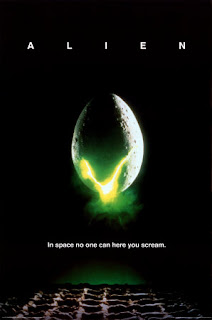
  • ALIEN The crew of an interstellar cargo ship battle a dangerous creature they find in the wreck of an alien spacecraft.
  • BEAUTIFUL MIND A journey of self-discovery by a brilliant mathematician once he was diagnosed with schizophrenia. He eventually triumphs over tragedy and receives the Nobel Prize.
  • DEAD CALM A married couple, trying to recover from the death of their only child, are terrorized at sea by a handsome maniac.
  • DR. NO – JAMES BOND An adventurous secret agent is sent on a mission to stop an evil megalomaniac from doing his evil deeds but his passion for women and gadgets help and hinder him in equal measure in his efforts to save the world.
  • FOUR WEDDINGS AND A FUNERAL A mild mannered Englishman begins to wonder if he’ll ever meet the woman of his dreams when he always attends weddings as a guest, never the groom, but when he meets a sexy American woman, he decides to pursue her as she could be the one to lead him up the aisle.
  • GLADIATOR When a Roman general is betrayed and his family murdered by a corrupt prince, he comes to Rome as a gladiator to seek his revenge.
  • GODFATHER An epic tale of a 1940s New York Mafia family and their struggle to protect their empire, as the leadership switches from the father to his youngest son.
  • HUNT FOR RED OCTOBER A Soviet submarine captain uses Russia's ultimate underwater weapon as a means to defect to the west.
  • INDEPENDENCE DAY Aliens try to invade earth on Independence Day.
  • IT'S A WONDERFUL LIFE A suicidal family man is given the opportunity to see what the world would be like if he had never been born.
  • JAWS After a series of grisly shark attacks, a sheriff struggles to protect his small beach community against the bloodthirsty monster, in spite of the greedy chamber of commerce.
  • LAST BOY SCOUT A private detective must team up with an ex-football star to catch the killer of a topless dancer.
  • LIAR, LIAR An attorney, because of a birthday wish, can't tell any lies for 24 hours.
  • PIRATES OF THE CARIBBEAN A 17th Century tale of adventure on the Caribbean Sea where the roguish yet charming Captain Jack Sparrow joins forces with a young blacksmith in a gallant attempt to rescue the Governor of England's daughter and reclaim his ship.
  • RAIDERS OF THE LOST ARK An archaeologist goes on a quest to find and prevent Hitler’s Nazi soldiers from obtaining the Lost Ark of the Covenant.
  • SHAKESPEARE IN LOVE A comedic portrayal of a young and broke Shakespeare who falls in love with a woman, inspiring him to write "Romeo and Juliet."
  • SIXTH SENSE A psychologist struggles to cure a troubled boy who is haunted by a bizarre affliction –he sees dead people.
  • TITANIC A young man and woman from different social classes fall in love aboard an ill-fated voyage at sea.
  • WIZARD OF OZ After a twister transports a lonely Kansas farm girl to a magical land, she sets out on a dangerous journey to find a wizard with the power to send her home.
  • WRATH OF KHAN An evil man escapes from his lifelong exile and returns to seek revenge on Admiral Kirk.

10 December 2010

Don't give up your day job!

What may be meant as a put-down, coming from someone who doesn't believe you can write, is actually very healthy thinking. Unless you make a consistent solid bundle with your writing, I'd definitely advise you to keep your day job.
  
He's got a day job, too.
After seven produced scripts, several unproduced commissions and more stuff in the works, people sometimes ask me why I keep my day job ... couldn't I make a living with my screenwriting? The answer is "Yes, I could... but I don't want to." There are three major reasons for it:
  1. Security and stability: As a family man this is absolutely key to me. I love my regular pay check - it gives me great piece of mind. Which brings me straight to point number two.
  2. The freedom to write: Knowing that I don't have to rely on X writing money to make it into my account by X date, means I don't have to think about the mortgage payments while I write.
  3. The luxury to choose: I've been able to turn down projects. As a full-time writer I'd have had to take jobs I wasn't interested in, simple because of the money ... and frankly, that isn't the most passionate reason to get involved in a project.
With this day job situation come two additional elements: One is the worry that you may not have enough time to write, the other is the worry that you won't be taken seriously. Both of these worries are, though, simply a matter of getting your head around them - which happens with time and experience:
  1. The matter of time: The more you write the better you develop your writing muscle. I've learned to be very disciplined with my writing - when I decide it's time to write, I write. When I dedicate time to writing, I crack pages. Over the years I've come to realize that other colleagues of mine, full-time writers, are never faster than me. That doesn't make them lazy, it just makes me more disciplined - this, in fact, really is hugely important if you keep your day job. The producer won't care what you do - as long as you deliver on time. 
  2. The matter of insecurity: Initially you may be worried that producers, directors or agents won't take you seriously if you reveal you have a day job and "only" write in your spare time. Get over it. The people you hopefully get to talk to are human (most of them, anyway) like you. They know you need to pay the rent. Be proud of who you are and where you are in life - and take your stories from there.
Honesty is powerful - so you have a day job - so what. You're a writer! You have stories you want to tell, need to tell! You're passionate, you're hungry - give me the damn commission and I'll deliver something brilliant, and on time, too! By the way, my next commission's just been confirmed and yep, you guessed it, I will not give up my day job.

08 December 2010

Plotting the story to death

Once you get commissioned to write screenplays, things like proposals, exposés, treatments in every size, shape and form become the norm. Understandable enough - someone's putting up the dough, that someone wants assurance that the money's well spent. Often enough, though, that part of the screenwriting gig isn't exactly a whack of fun for the writer.

To boldly go!
I've had the greatest bits of unstructured-free-flowing-anything-goes kinda fun with spec scripts and, on one rare exception, with a commissioned gig. As for spec scripts - heck, if nobody's on your back to deliver something one way or another - roll with it! All you need is your basic plot idea (and you'll know the genre, hopefully), your protagonist, your antagonist (plus needs, wants, obstacles - you know the stuff) - and off you go.

For me, personally, the most wonderful moments in screenwriting are when you don't know everything beforehand. When you truly live with your characters and you just write down what they do and say as you accompany them on their journey. I've laughed and I've cried when unplotted things suddenly happened - had to happen - because they came out of the story, out of the truth of each character - totally honest, just there, live. Pure bliss.

I've come across a fitting quote by Paul Theraux on Tom Browne's website (Screenwriter-Sales Guy)


"It is fatal to know too much at the outcome: boredom comes as quickly to the traveler who knows his route as to the novelist who is over certain of his plot."


Well, I wouldn't go as far as to call it "fatal" - but the man's got a point!


As mentioned above, I've also had this experience once with a commission. Unbelievable but true - I pitched an idea, the network loved it. Next they said "the contract's on its way" and "we don't want a treatment, unless you want to do one." I couldn't believe my ears. Of course I did a vague sort of treatment for myself - but when I had the direction, had all the important bits sorted out - I just let it flow. I had so much fun - coming up with the weirdest things, twists, turns, dialogue ...

... and here's the punchline - all of that very unusual stuff not only made it into the film - it also led to the film being Grimme Prize (Germany's top TV honor) nominated. And this same film is still, out of a series of almost 800 crime features - consistently named among the best 5 of all times. I wish there were more such free-flowing experiences in my future - alas, unless I write specs, I'm don't expect to be in for a lot of uncharted script journeying anytime soon.

But if you're a fresh writer and you write specs (and you better be writing specs!), you have the time and the passion and you crank them out - please, please do not plot your passion/weirdness/oddity/originality to death. Get the main points clear - then dive into that world, hold on tight and enjoy the ride!

06 December 2010

It's a craft, stupid!

You better be thinking of screenwriting as a craft and not an art form. Think of it as an art form and you'll be cutting off your ear. Think of it as carpentry and you'll be making chairs ... and yes, you won't go nuts. 

A work of art? You bet!
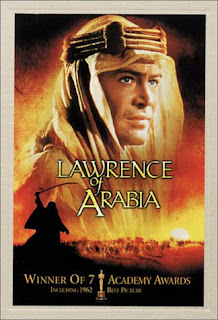
I can practically hear some writers huffing and puffing at the above statement right about now. How dare I? How are Lawrence of Arabia, Double Indemnity or Taxi Driver not art?! Well, yes they are - and no, they're not the screenplay. They're are, same as all films, the result of often chaotic collaboration of a bunch of creative people getting together trying to make the best film possible. And sometimes, yes, the result is sheer beauty - call it art, if you will.
  
But for a screenwriter thinking of your writing as art only hampers you - it puts too much pressure on you. You'll be thinking Michelangelo, Picasso, Rothko - and you'll be so worried about failing, about not measuring up, you'll end up blocking yourself. Screenwriting is "just" writing stories, putting words on paper. Think of it as a craft like carpentry because that's down to earth, it's doable. Not that making chairs is easy. If you've ever tried to build a chair, you know what I mean. But if you set your mind to it, if you're willing to put in the time, if you're passionate about wood, you'll learn how to craft your chairs. And people will buy them from you, too.
  
I truly think there are screenwriting artists out there. But the Charlie Kaufmans are like Mozart - pretty damn rare! I prefer living my life as a carpenter, rather than a genius. I mean, just look at what happened to Mozart. Thinking of screenwriting as a craft makes everything less daunting for fresh writers. Maybe you'll build chairs eventually, chairs that'll be sturdy and beautiful. And when they're bought, they'll be worked on by other people (hopefully together with you) and your chairs will be luxuriously upholstered - or changed into a couches!
  
So be a craftsman/woman ... and maybe, just maybe, sometime down the line people will call that beautiful piece of furniture you've worked on - art.

04 December 2010

What if they steal my story?

A good friend asked this question and it's one that will be asked until the end of time. There are all the obvious answers and the few well known rip-off stories. All in all, though, I have a far less protective take on all of this.

Don't be afraid of the jungle out there.
I understand the concern especially fresh writers have. You're embarking on a new journey, eager to explore the alluring and treacherous film industry jungle. You've read countless stories of dreams come true and dreams gone bust, stories of El Dorado and stories of ugly beasts that will tear your hopes to shreds. And now you've written a script, you're ready to jump in, anxious, excited - no wonder you want to protect yourself.

So you do the usual - you copyright, you register, you mail to yourself, etc. Here's one link - or google "register screenplay" or "protect screenplay" and you'll quickly have all the options. It all makes good sense and yes, I also registered my first bunch of spec scripts with the WGA. It gave me a sense of security as I marched into the jungle. But I've come to relax about it - in fact, I'm not worried about it at all these days. If I feel like sharing a script or talking about an idea - I do so, period.

Look, here's the rub. For one thing, why should Hollywood or any independent producer rip off your story if they can cheaply option or buy it? Trust me, those guys are not spending their business days trying to find ways of making their job even harder than it already is. If they see something they like, they'll tell you so and won't bother stealing it. For another thing - stealing a screenplay isn't as easy as it sounds.

But let's assume there's this evil-minded producer who just takes the essence of your story and has another writer create something new from it ... well, let's face it - this happens every day. Ideas are free. What makes your idea within your script so great is the way you've written it - that cannot be copied - it's your voice and producers are looking for original voices - and are more than willing to pay for those original voices.

Like I said, I understand the concerns. And yet I would hope that writers learn to give up that fear. Look - it's great that you believe in your script - you should! But that someone would steal it is highly unlikely. By being fearful and keeping your scripts and ideas to yourself you end up not making tons of potentially highly useful connections. It's called networking! I say stop worrying, do talk about your ideas, do share your scripts and from that, good things will come. You'll be remembered as the writer with the great ideas. You'll be thought of as the engaging dude. You'll be mentioned as the bright mind. And even IF someone were to rip off an idea of yours - so what - you'll have a thousand others - move on!

All in all, fear can block you. So open up, get out there - engage!
  • PS1: Trust your gut - if you're really absolutely certain that your idea is one in a gazillion, then by all means protect it before you talk about it. But seriously now, is your idea really that unique? Isn't the uniqueness more often than not in what a writer's done with an idea?
  • PS2: If you plan on collaborating with another writer - even if it's a best friend - write an agreement that makes you equal partners. Both of you sign it - then you forget about it and get on with your screenwriting adventure.

03 December 2010

What is it with us and comics?

Quite a few of us screenwriters have more than a fleeting affection for the world of comics. We read comics, of course. But we also have great geek-deep knowledge of characters, alter egos, origins, relationships, sidekicks, ages, costumes, crossovers, shared and alternate universes, you name it. And, yes, we do have action figures and statues standing on our shelves.
       
Oh yeah, he's on the shelf, too.
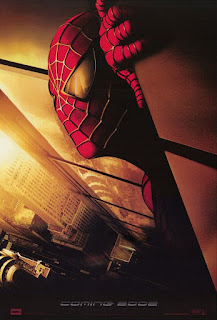
Why is that? Why do I love knowing that Daredevil, the mighty Thor and Doctor Strange are looming large, in the form of statues, on the shelf behind me (right in between stacks of screenplays, novels, projects, DVDs and action figures)? Why do I like my writing cave to be decorated with all this colourful stuff - like the flying Silver Surfer, the swinging Spider-Man, the climbing Batman - when, after all, I write dark and twisted adult crime scripts?

You could call us geeks or nerds. Adults unwilling to finally grow up (ah, a compliment if I've ever heard one!). You could of course also say that we're just smart people, that we stay immersed in the world of comics because they offer great classic tales, archetypal characters (kinda like reading the ancient Greeks, really). Comics offer indeed a wealth of inspiration. And finally you might argue that we're just business-savvy dudes, eager to write wherever we can. I know a few screenwriters and novelists who also write comic book stories (like David Liss doing Marvel's Black Panther - I mean seriously, how cool is that!?).

Frankly, I think it goes beyond all that. It goes deeper and it goes simpler. I think we love the geeky stuff surrounding us because it's a constant reminder of the child inside of us. Whether it's the Samaritan frowning, Boba Fett aiming, the Spectre glowing or Spawn glowering - they keep the kid inside alive, awake, alert. The geek stuff reminds us (often subconsciously), every day, of why we write - why we love stories - why we fell in love with stories when we were kids. It had nothing to do with business, of course. It had to do how we felt. It was the pure joy of living in those stories.

That's why we write. With every scene we write, we try to recreate that complete sense of being IN the story (and we do so well knowing that this is exactly what we want our audience to experience, too). The way it was when we were kids - no analyzing, no comparing - just intensely living in that one world, together with the characters, our heroes. And so our comic book statues and action figures will continue to colour our writing caves... which reminds me, they need dusting. After all, they do so much for me, might as well treat them nicely.

02 December 2010

Never just the one


When you start out as a writer, you have to write. Seems kind of obvious, doesn't it? But it ever so often happens that fresh talents write their first story and then fiddle around with it, shape it and reshape it - always hoping for this one script to become their big break. Well, 99.999(keep counting)% of the odds are against that ever happening. If you rely on the one, you're doomed.
   
Why? One - because your first script's propably not quite as brilliant as Double Indemnity. Two - because your revisiting this one story again and again, twisting and tweaking it, isn't the kind of writing you need to do. You need to grow your muscle. You need to grow your writing muscle by working it continuously - every new story, every new character, every new creation means you're flexing that muscle.

Another thing is likely to happen if you focus on that one story to be your key to fame - you'll eventually end up hating that story. Whether you'll admit it to yourself or not, it'll happen because you'll have too much riding on that one tale. So learn to let go.

If you're confident that the script's in good shape (it'll never be perfect anyway so be passionate about it, but be smart about it, too) - send it out and start writing the next story right away. Your script will get rejected time and again, it may even get nibbles and then get rejected. If the script's any good it'll be a mix of rejection and hope, the dangling carrot that will keep on getting pulled just out of reach. If you have everything riding on just that one story - it'll drag you down and kill your passion for writing.

But if you write while someone dangles a carrot, it won't bother you half as much because you're knee-deep in the next story already. Keep on writing and it'll keep you sane. It'll keep carrots from becoming all-important and it will eventually give you the powerful writing muscle (and loads of great writing samples) that'll allow you to tackle just about anything.

Here's my way of thinking: I write because it makes me happy. Dangle all the carrots you want - if I get one, cool. If I don't, I'm still writing - either way, I'm happy.