26 January 2013

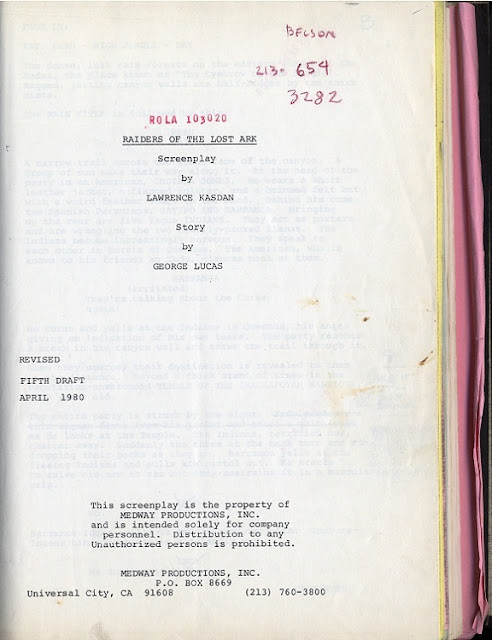
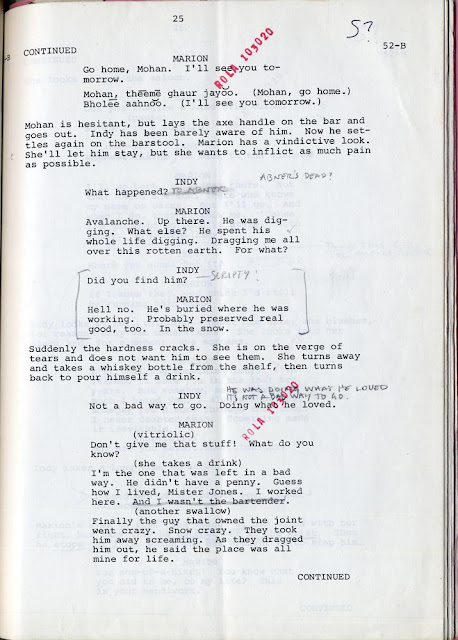
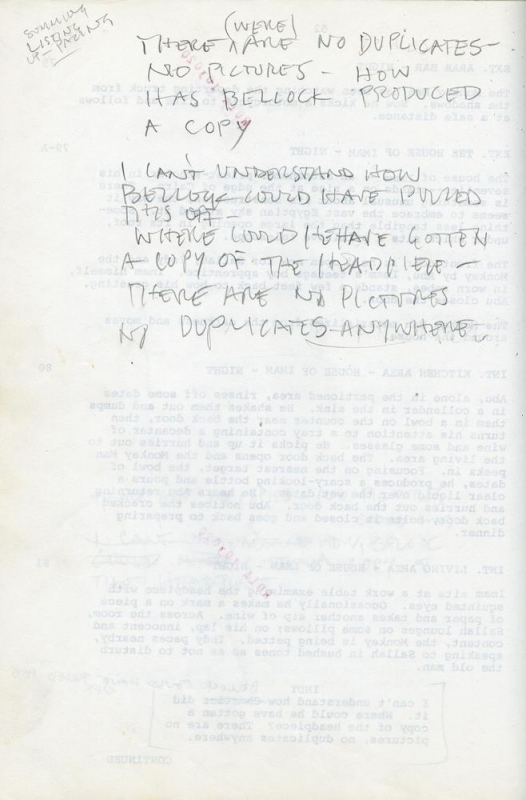
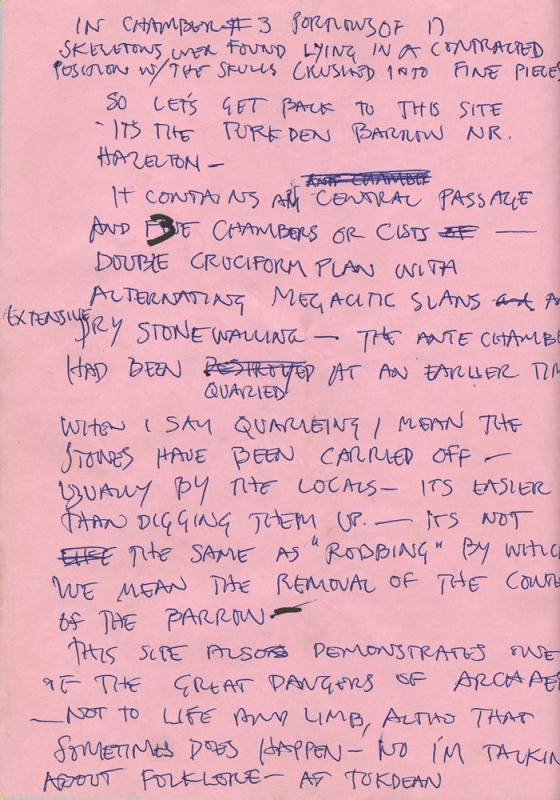
A few Harrison Ford annotated "Raiders" script pages

Found these pages buried in Google images - some lucky (and wealthy) person aquired the complete heavily annotated "Raiders of the Lost Ark" script, by non other than Indy himself, for a 100'000 bucks. Well - here's a least a few glimpes.

Harrison Ford apparently used this script throughout filming. Notes range from single words to complete pages of writing and cover all aspects of the film making process, ranging from dialogue alterations and questions about the plot to suggestions and perspectives used to create the iconic character of “Indiana Jones”.


These are all the pages I've come across. But heck, if this has given you an appetite to dive deeper into the world behind the film - here's the Making Of - part 1 and 2:


20 January 2013

The 5 key things every story needs

According to script guru Michael Hauge, there are five key elements any story needs.

A classic hero's journey
He argues that every story has a far greater chance of ever being turned into a film and reaching an audience if these universally applicable elements are there. I think he makes some interesting observations on why the Hollywood-style of storytelling works across the globe... Here's the transcript - below that the 4min YouTube clip:

Transcript of script chat with Michael Hauge:

"... The key things that any story has to have if it's going to be a movie, if it's going to have a chance of being produced, of reaching an audience:

  1. The first is, it's gotta have a hero. It's gotta have a protagonist, somebody we're rooting for, some main character who's driving that story, who's the focus of our attention.
  2. The second thing - we have to empathize with that character. We have to put ourselves inside that character psychologically. So we like them, or we feel sorry for them or we worry about them - but in some way we become that character on a psychological level.
  3. The third thing - the character has to be pursuing some goal, some desire. That hero has to desperately want something. Desperately want it, not just mildly want it.
  4. Fourth - it has to seem impossible to get. There has to be conflict, because the goal of any movie ultimately and the thing that makes a successful movie successful is - it creates an emotional experience for the audience. That's what you gotta do as a writer or a filmmaker. And the emotion primarily grows out of conflict. So the bigger the obstacles you throw in your hero's way, the more emotion there's gonna be.
  5. And the fifth quality is courage. You want to write stories where, whatever the hero wants, in order to get it they have to put everything on the line. In a thriller their putting their lives on the line - or in an action movie. But it might not be that. But it might be their sense of who they are, their own identity, or risking embarrassment or rejection or something that they've been afraid of. But they have to risk a great deal.

I think if any one of those is missing from a story idea or a script, it has a very very slim chance of getting made, let alone reaching an audience. Because, I guarantee, cause I've done it, if you look at the top 100 movies of every year - take away the documentaries and stuff - although most good documentaries have those qualities, too, actually - but for fictional films you look at the top 100 coming worldwide at the box office - every one will have those five qualities.

What my belief is, except for maybe Indian cinema in India, Hollywood filmmaking is the most popular in the world. I recently, before coming here, I looked at the box office returns in Sweden for the last few years and, in any given week, there's always a Swedish movie or two in the top ten, it's usually not number one - but most of the movies are the same movies in about the same position they were in in the United States when they were released there.

And I don't think it's just because Hollywood has more money to spend. Because some of those popular Hollywood movies have budgets that are no bigger than Swedish movies or Australian movies or whatever. I think it's because Hollywood has developed a set of principles of storytelling that really reach the mass audience effectively.

And because we've been watching Hollywood movies for over a hundred years, it's also molded the  expectations of the audience worldwide. So given that those principles have proven the most successful at reaching the mass audience - then I'm comfortable saying that that's what I bring to the party. I have found that, certainly in seeing the Swedish films I've seen, or the Australian films, there's certainly cultural differences. There's certainly tonal differences. There's different subject matter. Humor is different in different places, somewhat. But again, I'm not really, my expertise is not in what those differences are.

And what I do with the lecture that I'm doing here - or whenever I lecture in a country other than the US, it's pretty much the same lecture, because I say - If you can take these principles and apply them to your story idea, even if the idea might be uniquely Swedish - ehm, it's about a celebration, a holiday that isn't celebrated anywhere but Sweden, that's fine. But the principles on how you create empathy, the principles of structure, the principles of what makes a love story work or not work - those are universal."


19 January 2013

Script guru Michael Hauge on the hero's journey

After about a decade spent in the marvelously mad world of screenwriting, you'll know all the terms, you'll know about structure, you'll know what they want to hear in meetings and you'll know how to get it across. 

Prime example of the hero's journey
After the second decade (as is the case with me), all of the above is pretty much internalized - you don't think about it anymore, it's become part of who you are. You're also in a place where you'll want to go your own creative ways, challenge yourself, break a few rules - and you can do all of that because you know the essentials inside out.

But as a beginner all that stuff, the books, the seminars, the workshops, the dos and don'ts - it can seriously wear you down and/or scare you off. Here's a few thoughts that'll hopefully encourage you to NOT quit (at least not before you've given it a decade or so).

And below's a series of roughly 4min clips by script guru Michael Hauge. I have to admit he pisses me off right off the bat - his first words are "The first 10% ..." - and you'll see he structures it all very  concretely. I can't stand numbers and I most certainly don't think of scripts in percentages ... but you need to realize that the man's got a point - it's a business and if producers think in percentages, it is essential that you understand and speak their language, too.

So view the clips, they're sound - and what I particularly like - they lead you through the theory of the hero's journey with the concrete example of "The Firm". So watch, take from it what you can and then get back to writing!

Stage 1 and Turning Point 1


Stage 2 and Turning Point 2


Stage 3 and Turning Point 3


Stage 4 and Turning Point 4


Stage 5, Turning Point 5 and Stage 6


03 January 2013

It's all about the twist and the turn

I've said it before and I'll say it again - screenwriting is easy. All you need is a few basics, discipline, stamina and a passion for film ... and then just remember to never, ever, bore the audience. What that comes down to is simply twists and turns.

Read the books, go to seminars, attend the workshops, by all means. Every guru has a bit of something useful to impart. But all they do is, in the end, give you the basics in a thousand different forms. They give you names for everything and put a larger meaning into every single step you might possibly consider taking. All of those elements wear you down and all of those names and explanations weigh you down. Your potential script becomes this artistic monster if you choose to believe them, if you choose to take all of what they say on board.

The monster will stare at you, stare you down, scare you. You'll wait, you'll put your story on hold, you're not ready. You haven't yet mastered this or understood that. When you write your script, you want it to live up to everything they preach, you'll want it to be perfect. And all of that sets you up for failure. Here's what you should do:

Stop all of the above.

Don't try to measure up with your script. Don't try to live up to other films, other voices, other writers. Don't try to describe and analyze everything. Forget about all of those fancy words - screw the climaxes (hell, lousy pun intended, sue me), tell that reversal to kiss your ass, kick the shit out of beats and the sequences, choke the inciting incident, shoot mid-point right between the eyes and take the chainsaw to the hero's journey. Okay, seriously now, all I'm saying is, don't let all of that stuff strangle your creativity.

Back to my statement: "Never bore the audience". That's it. In a nutshell. Whatever stage of your story you're in - be creative, be inventive. Whatever the fancy word, and that includes the ever portent "subtext", of course, they all come down to "twists and turns". Every subplot, every layered line - they're all surprises built into your tale. So - whatever you write, regardless of genre - surprise your audience, keep them guessing, deliver but in unexpected ways. That's what it comes down to. Period.

Whether your story will be good is a whole different matter - but at the very least you will have written something that didn't bore the audience. That's more than can be said for a great many films - so snap to it - TWIST AND TURN!