30 November 2010

The gift that keeps on giving

A month has passed since the London Screenwriters' Festival extravaganza took place over the course of three days at Regent's College. We've all moved on, either back into our caves to work on scripts or back to hunting the next (or first) screenwriting gig. But for all of us, the LSF still reverberates.
       
If you were there, you'll know why. The gangbusting team of organizers, led by David Chamberlain and Chris Jones, created (among so much else) a private online Facebook-style network for delegates and speakers only. This gave all of us, pre-festival, a chance to exchange and get to know each other. By the time the conference came around, I walked in and recognized half the people there - brilliant!

To get a glimpse of the LSF 3-day-non-stop action, check out these video clips: Day One, Day Two, Day Three. 

But equally brilliant is the value of this private network post-festival. During the three days, the hundreds of delegates obviously couldn't attend all the sessions because of overlaps and often simply because sessions were jam packed. So the decision was made to film the sessions and now, one by one, these sessions appear on the private delegates network. It's the Festival that keeps on giving!

So if you have been part of the LSF, you're still enjoying the spoils. And if you weren't there, I can only suggest that you make it in 2011 - so you, too, will be part of the next Delegates Private Network!

26 November 2010

Better payment balance = better scripts

It's great to get commissioned. You get paid for what you love doing the most - you get paid to write! Then pretty soon you learn about payments, too. About the how and the when and, of course, the how much. And that's when you start to wonder ... could there be a major flaw in the European system? The answer is yes.
              
A good balance, there should be.
The way it works is simple enough: You get hired, then you get paid in installments until the full sum agreed to in the contract is paid out. Sounds okay, doesn't it? Well it would be if there were a smart balance built into that system. As is now, writers get paid the small amount of the overall sum for the large amount of time they spend on building the foundation of a story. Later on they get paid the bigger chunk for typing it all out into screenplay form.
       
Most writers will agree that they spend 50% and more of their overall time with the foundation (world, theme, characters, research, structure all the way to a great treatment). Once you have a killer treatment, the script flows beautifully and fairly swiftly from it. Robert McKee apparently said that, if you spend six months on a script, you shouldn't start writing the actual screenplay for the first five and a half of those months. That may be a bit extreme but the point he makes is correct.
     
You might say - where's the problem? After all, in the end the writer will see the full amount. But here's how this plays out in real life (where writers have obligations like other people - with family, rent, mortgage, insurance, food, etc., ya know?) - the writer knows he gets paid very little up front - what does he do? What would YOU do? You hustle to get as quickly as possible to the stage where you get the bigger payments, right? As a result the producer may fire you because your treatment isn't good enough. The project then proceeds with a different writer and the cycle continues. In the end countless potentially brilliant European stories will never be told (because they were never developed to their potential). As for the stories that end up getting made - how often to you find yourself thinking - "this could have been so much better" ?
     
Is this so difficult to change? After all, every producer will tell you that he knows how important the development phase is and that it should never be rushed. Those same producers simply need to put their money where their mouth is. I absolutely believe that a change in the remuneration system would create an important shift in Europe. Writers would, and finally could, take the necessary time on the building of rock-solid story foundations.

23 November 2010

Of typewriters and monkeys - Amazon Studios

Had to steal the title line from Olivia Hetreed, Chair of the Writers' Guild's Film Committee, who issued yet another statement questioning the sense of the newly launched Amazon Studios.
Whoa, slow down!
        
If you're in the film business, I won't have to repeat any of it. You know that Amazon's just launched its very own "film development venture with 21st century technology". Sounds grand - and is obviously full of holes as you'll see if you read any of the below statements by professional writers like Olivia Hetreed, John August, Craig Mazin, James Moran.

And here's something that you, as a beginning writer, probably haven't been given by these pros - the direct link to Amazon Studios - ta-daa! http://studios.amazon.com/ (yeah I realize you would have found it on your own but I'm trying to make a point here - so hold on, will ya!?)

Everything that has been critically said about Amazon Studios rings perfectly true. The idea that social media and the collective gathering, sharing and "improving" of ideas will somehow net us the "Lawrence of Arabia"s of the future is ludicrous. The idea that you give away your rights as a screenwriter isn't particularly appealing either. But I do see two reasons why you might possibly consider entering a script of yours anyway:
  1. If the passion for your script has faded: There may be a spec script of yours that's collecting dust and your passion for it has faded - why not give it a try? So you lose your rights for a long while. So most likely nothing will ever happen ... you don't care either way.
  2. If the passion for your script burns brightly: It'll be like playing the lottery - just that the price you pay to play is pretty damn steep. The price is your passion and it'll get ripped and torn along the way. But heck, there are lottery winners out there, happens every day to someone. 
If either of those two options above appeal to you, you should be worried, at the very least. Writing is not first and foremost about being produced, that's the icing on the cake. Writing is about us, our hearts, our passion, the worlds we create, the characters we send on incredible journeys. Writing, to me, is about being allowed to live in the world of my characters for a while, about my adventures with them. So before you start submitting (pun intended) to Amazon Studios - think about why you write.

22 November 2010

The Commander's Intent

If "Commander's Intent" sounds like army-speak to you, then you're absolutely right. But the idea of the CI transcends the military world and works just as well for all of us in the business of making films.

The clearer the goal, the
better you lead your story to victory.
The concept of the CI came from the simple realization that no plan survives contact with the enemy (meaning all plans get literally blown to bits the moment battle begins - leaving the whole chain of command to scramble without even a moment's chance to stay "on plan"). The CI was to be a clear, plain-speak single sentence across the top of every order. This is standard today. It forces commanders to identify the single most important goal and communicate it clearly and simply - and it gives the troops on the ground to keep the overarching goal present at all times.

As with all things that need to be simple - it isn't about dumbing it down, but instead about finding the core. As screenwriters, we know all about that. Writing out an idea, a story, a script, is one thing. But concentrating it all into one crisp synopsis, a hammer one-pager, a killer logline or a never-to-be-forgotten tagline (e.g. "In space, no one can hear you scream), is often far tougher. But we also know that, once we have it, it's hugely useful.

Commanders have two questions they need to answer: "If we do nothing else during tomorrow's mission, we must ..." and "The single, most important thing that we must do tomorrow is ..." Example: The Commander's Intent might be:  "The single, most important thing that we must do tomorrow is to keep the villagers safe." In battle, regardless of whether an individual plan has exploded - every soldier will remember that one sentence "keep the villagers safe" - and even if he has to abandon his planned orders, his every action will remain in line with that overarching Commander's Intent. So how's all this supposed to help you?
  • In meetings: Have your CI (you may also call it essence, theme, core, key message) clear before you meet the director, the producer, the agent. Then, whatever curves they throw you, you'll have the CI to hold on to.
  • During collaboration: If your CI is clear, communicate it with the producer, with the director, with the actors. Regardless of what happens in the heat of cinematic collaboration - if the CI's clear - you'll still all be going for the same goal.
  • In the cave: When you sit in the cave, staring at the blinking cursor - find your CI, write it across your bathroom mirror - or tape it to the wall above the monitor. 
A good CI is like a beacon - it'll guide you.

20 November 2010

It's a matter of time

We don't have the time. The time to to write, the time to procrastinate, the time to do nothing, the time to buy Christmas presents, the time to read a book, the time to play with our kids or talk to our partner. After all, we're busy writers. We just don't have the time... right?
       
You do have the time.
It's this throwaway line we use umpteen times a day: "I don't have time." We say it with an apologetic smile to our children, we say it with an annoyed frown to the dog and that frustrating wagging tail of his, we say it with a helpless shrug to our partner - we don't have time. We'd really love to, but we just don't have the time. But the simple fact is that we have the time. Time is just what it is, it is there for us to choose what we do with it. Time is as patient, as peaceful, as frantic or as blissful as we want it to be... as we make it.

Every time we utter "I don't have time" - it's an excuse (at the very least it's a deflection to avoid an argument). Because, let's face it - it's never that we don't have the time, it's simply that we choose not to take the time to do something. Admittedly - we can't do everything and so we prioritize - we choose to do certain things and choose to not do certain other things. We give some things more importance over other things... and that's just fine as long as we're clear on what we're doing.

You're a member of the human race (well, you're a writer, close enough). You know that this isn't theory, isn't philosophy. Time is on on our side or working with the enemy. Time is cotton candy cloud and time is a drug. When we let it, time will drive us crazy and I've written about the the ever important deadlines here. As writers, time can be a great enabler - as always, if we learn to make best use of it. 

Take the time, or don't. Keep an eye on yourself, listen to your words as you speak them. And if you catch yourself saying the ever convenient "I don't have the time" ... then pause, reflect and rephrase it to "Actually, I don't take the time". When you rephrase it, you'll be far more honest with yourself and your opposite ... and, I'd venture to say that, when you look your opposite in the eye, readying to say "I won't take the time" (to listen to you, to talk to you, to play with you...) - you just may find yourself making time.

Set your deadlines and beat them. But balance your priorities and you'll find that the precious time away from your words will bring you the words you need. Procrastinate, have fun, take time and give time - it'll not only make you a better writer, it'll also make your life a heck of a lot more fun. Have a fantastic new year.

19 November 2010

Three ways to get an agent

Why exactly three ways, you may wonder. Simple - that's the number of agents I've had (and I'm still with number three) and so that's the number of experiences I can share - they've certainly worked for me!

Screenwriting's a business - act accordingly. 
First off - do you need an agent?  Yes - it helps in so many ways (more on that in another post).  Does the agent need you?  Absolutely not.  If they're any good, they'll have a roster of busy clients and they won't be looking around for more clients to make their own lives even more hectic.  So you're up against some odds - what can you do?

US: As a fresh writer in New York, I just wrote the heck out of every piece of paper I found. Then I got friends to read the stuff, then I started entering the scripts in script competitions all over the US. I got some quarter-, semi-, and finalist results. When I reached the semi-finals in one of the most prestigious competitions - the Nicholl Fellowships - I jumped at the opportunity. I copied the letter probably a hundred times and walked it to every lit agency in New York. Most didn't even look at it, a few showed some interest, wanting to read the script. One of those then invited me in, asked for another script and signed me exclusively. Basically, I had nothing other than some spec scripts, a fluffy letter and a lot of positive attitude. So, whether it's a Nicholl Fellowship letter or something else - use what's at your disposal, do the leg work, believe in yourself and keeping banging down those doors with a big smile on your face.

Germany: When I moved to Europe I quickly figured out that I didn't need an agent in Germany.  The system is different, production companies and networks are far more approachable.  I immersed myself in the industry, met directors, producers, networked the heck out of everything I could.  I got my first network gig without representation, then decided to get an agent with my first contract already under my belt. The agent signed me in the knowledge that I was already a produced writer.  Why did I get an agent?  Because they do know the fine print and the loop holes.  He was able to always get me the better deal - with a known agent, negotiating contract numbers automatically start higher. He was even able to re-negotiate that first contract to ensure I wasn't missing out on anything. So yes, he got his percentages - and I got more than I would have without him - simple win-win.

UK: I eventually decided to switch agents not because I was unhappy with my German agent, but because I wanted to shift my career back to the international market.  I looked around and researched.  I then signed up for a pitching seminar where the agent I wanted was running the show.  I prepared the best I possibly could.  I planned every move, every question, every possible answer.  I endlessly rehearsed my pitches for the seminar and finally went there, relaxed in the knowledge that I was prepared.  I didn't push, I simply did my best to be professional.  At the end of the seminar I did nothing but ask if he might be willing to look at the one-pagers of my spec scripts.  After reading those he requested to read a few of my scripts and then signed me because of everything he had seen from me, my preparedness, my pitches, my attitude and, of course, my writing.  All put together he had a fairly good sense that I would not be wasting his time.

So yes, in some countries you can get by without an agent.  Would I advise it?  Never in a million years.  Writing is a fantastic world to be in - and it's one heck of a tough one.  Dealing with deadlines, script notes, producers, networks, directors and actors is quite enough.  A good agent will sometimes get you work, always get you the best deal, shield you from hassles you don't need and will always be on your side.

17 November 2010

Learning the craft of screenwriting

Craig Mazin posted an article about the value of script consultants - going especially after big wigs like Linda Seger and her books.  Essentially, I agree with him - some of the plentiful screenwriting advice offered by the so-called screenwriting gurus isn't just expensive - it's also downright unhealthy because it prevents you from actually writing.

One of the tightest scripts ever
The Artful Writer is a pretty cool website by Hollywood screenwriters Craig Mazin and Ted Elliott.  Craig is working on Hangover II and Ted on the next Pirates of the Caribbean - so these guys are definitely happening writers.  Craig's article has lots of good points.  One of them being:

"Simple rule of thumb: don’t spend a dime on a book, a lesson, a seminar or advice if the person selling doesn't have a real movie credit ... Don’t spend a dime unless the seller has worked, is working and is gonna BE working.  Multiple credits.  A hit or two would be nice.  Or recent critical acclaim, like a script on the Black List.  A recent spec sale, or a spate of new gigs.  Awards and nominations never hurt…"

In my experience, it isn't quite that black and white.  I've known some brilliant acting teachers who've never made it as actors - but as teachers, they were practically Buddha.  I'm just saying, you don't need to stand on top of Mount Everest to be able to see clearly.  As for screenwriting, here are the three ways of learning I'd suggest to beginning writers - in this order of importance:

1. Watch movies and read scripts.  Hundreds of them, thousands of them.  Download the scripts, analyze the movies with the scripts as you watch them.  You'll learn to spot why something works - you'll learn to feel structure.  Hands down the best way to learn about screenwriting. Read "Die Hard" and you'll see what makes producers happy.

2. Visit conferences and festivals.  They're a great way get first-hand insights from accomplished writers.  It's also a great place to get empowered, to meet like-minded people, to pitch and to network.  The last one I attended, the London Screenwriters' Festival, was simply outstanding.

3. Pick up those "How to" books.  I'm listing this because those books are not all bad.  But they all contain a lot of posturing by the gurus, so learn to separate those bits from the useful stuff.  When I started out I picked up half a dozen of those books, read them and marked the things they all had in common.  That's the solid stuff - as for the grandstanding - just ignore it.  Again, don't rely on these books.  Writing is not theory - it's doing it.  All the time.

Basically, anything that gets you writing is at least worth considering.  So if it's a McKee seminar that gets you writing - heck, if you have the dough, hop to it.  Get in there, pick up what you can then hurry back to your cave and continue writing.

You don't need anyone's help to write.  But if you choose external insights (books, consultants, etc.), pick wisely and filter what you get.  There is some very useful knowledge and empowerment out there - but it'll never do the writing for you.  If you're a writer, write.  Write, soak in films, write, bathe in scripts, and write again - always write.

16 November 2010

Writing in someone else's world

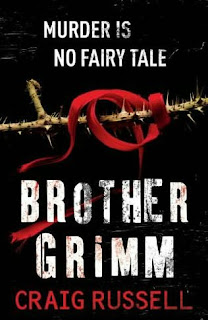
Adapted in 2009
Adapting novels?  Are you kidding me?!  Why would I spend time adapting somebody else's creations when I could write my own stories?  That was my thinking before I did my first adaptation and - man oh man - has that ever changed since then!

When the first adaptation opportunity came around and I didn't exactly jump at it.  At the same time I didn't shy from it either - I saw it as a challenge, something new, a chance to explore new territory, a place my writing muscle hadn't traveled to before.
    
So I wrote a proposal on how I would adapt the novel in question - and I ended up getting the gig.  Now, having worked on several novels already, I see it alltogether differently.  Adapting a novel is by no means less creative work than shaping a spec script - if anything, the challenge is even greater.
   
It's obvious just how different this kind of writing is from creating your own worlds.  There's a given setting, there are characters and passions and plots and layers - it's enough to make your head spin because more often than not, any given novel will give you more than 400 pages worth of pre-created glory.  Cramming that into a film?  You either need a sledgehammer - or craft (and, hopefully, talent).  With my first adaptation I found myself having great fun re-reading the novel several times, highlighting things that stuck - visuals I instantly saw, moments that moved me, stuff that I (as the audience) simply HAD TO see on film.  With that same highlighter I happily slashed through a ton of backstory, scenic descriptions, internal conversations.  So much of most novels thankfully purely belongs to the novel and has no place on screen.  When I finally looked at my highlighter's marking, circling and crossing results, I found that I didn't have to worry/think about half the novel's pages.

Getting any screenwriting gig is hard - getting the chance to adapt novels is, I'd say, even harder.  The reason is obvious - novels are often optioned and/or bought because they've been successful, because they have an in-built fanbase.  So of course any producer hopes to get some level of security by hiring a proven screenwriter.  That, of course, leads to a false sense of security at best.  Naturally the producer should look for a great writer - but that writer should also have the right passion for the novel.  It should never be just a job - never.  In my experience, producers go out to agents and ask them to suggest writers for the adaptations.  A number of writers will then craft proposals on how they would adapt the novel.  From those proposals a producer usually gets a pretty good idea where the right passions lie - and whether or not they are in line with the producer's vision.

Parts of such an initial proposal offer dramatic changes from the novel - it doesn't work any other way.  Unless you turn the novel into a miniseries, the time available will require you to drop subplots and characters.  You'll need to drop entire story lines, you'll need to sacrifice some of the novel's beauties.  When you put your suggestions for dramatic changes into a proposal, you risk alienating the producer and/or author of the novel.  But that's a risk you have to take - don't try to please.  You may hit the nail on the head with your take, you may not - but either way the producer will see that you're a writer with a passion, with strong and well articulated opinions about the novel - and with plain ole' guts.  That may get you the job, or it may not - but it'll definitely leave a good impression and that may come back to greet you sometime in the future with another gig.

Whatever the changes, however dramatic they may be, what should always remain, firmly embedded, is the essence of the novel.  Usually that's the thing that attracted the producer to option/buy the rights to the novel - and attracted you to adapting it.  That essence can be a thought, a message, a state of mind, an iconic character - that essence should alwas be there, pure, the spirit in the room.  Other than that, nothing's entirely sacred, really.  A great many changes need to happen to turn the novel into an exciting film.  Some of them are painful.  The producer knows that, the author of the novel knows that.

Just as the first draft of your screenplay will never be the shooting script, the novel will never be the film.  From the novel, through the adaptation and finally onto the screen - there's a world of collaboration and compromise, a world of good laughs and fierce fights - all in the knowledge that everyone working on the project wants the same thing - to create the very best film possible.

13 November 2010

Suck it up and keep writing

Last year Josh Olson, writer of 'A History of Violence', wrote a lengthy piece entitled 'I will not read your fucking script'. Guess I was busy writing at the time because I've only now come across it. The article caused one hell of a stir, thousands of comments, pro and con, lovers and haters. It's worth reading, for sure - and it'll teach you a few things, regardless of what you may think of Josh Olson. 

Olson probably needs a bit of anger management therapy and takes himself just a bit too seriously. Still, he does have a point. In essence, all he says is that he's a busy writer and people shouldn't impose on him with requests for his opinion on everything from story ideas to spec scripts. He makes that statement vigorously and uses lots of colorful words along the way. His writing makes you think he's this one overblown asshole. Maybe that's what he is - maybe Hollywood's gotten to him. And maybe he's really just had too many bad experiences.

If you're a fresh writer, just starting out, you should take note. Powerful people are busy people - that doesn't automatically make them assholes, but it makes approaching them difficult. If you actually do see an opening, use it only if you're absolutely ready and absolutely sure you're not wasting that person's time. Those doors are most unlikely to open twice. Hand that person, let's call him Spielberg, a shitty story idea on smudged paper with spelling errors and a story that makes no sense whatsoever, you can kiss Dreamworks good-bye. Simply put, don't burn any bridges before you even get a chance to cross them.

Now for the most important bit of learning: If Josh Olson tells you that he won't read your fucking script, suck it up. If Steven Spielberg say you don't have any talent, suck it up. If Kevin Spacey twitters that you're the worst writer on the planet, suck it up. Learn how to handle rejection and learn how to handle it gracefully, humbly. They may be right, you may indeed be a miserable writer. But if you let rejection turn you off writing, then you're no writer to begin with. So take every rejection you get (and there's plenty to be had), suck it up, learn from it and always keep on writing.

Hmn... makes you think, doesn't it? If you or I were in Josh Olson's shoes - would we be that way, too? I sincerely hope not. Yes, I wouldn't be able to take the time to read everything - but I would, at the very least, find more positive ways of saying 'no'.

12 November 2010

Glorious 12 point Courier

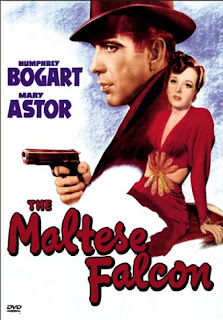
We all know the deal - as a screenwriter, you use Final Draft or any of the other screenwriting programs. They format everthing neatly and set it all in Courier 12pt font.  But we shouldn't just use that font, we should treasure it, because ... Courier 12pt isn't just a font - it's the stuff that dreams are made of.

Totally ridiculous, right? This dude's off the rocker. But wait, hear me out. I realize that today the software does all the formatting for you - it's just there, it enables, takes all the pesky stuff away from you so that you can just concentrate on the story. Heck, that's exactly what it does and it works like a charm ... but I must admit I occasionally miss the days when manually formatting was an important and very useful part of my writing process.

Where was I? Oh yeah, Courier 12pt! When I started writing scripts in New York I quickly gathered that story was one thing, format, on the other hand, was everything! Story simply didn't matter if the format didn't present it properly. Not using Courier 12pt, or cheating with the margins (haven't we all tried that one?), instantly marked you as an amateur and your script was - 100% guaranteed - never read. When I started working for German markets in the late 90s, I was horrified to see that no one cared about format - every writer fiddled to their heart's desire and producers appeared to be just fine with that.

Those writers got jobs, same as I got jobs. The difference was that I continued to stick to format and my beloved font. I kept on carrying that baggage, that proud Courier 12pt Hollywood history. What if, one fine day, Hollywood decides to change the standard font?  I think most people wouldn't care ... and I know that I would. 

I simply love knowing that many of my all-time favorite films were made from scripts written with the same font we all still use today. With every Courier 12pt word I type, I'm a living part of that glorious history.

11 November 2010

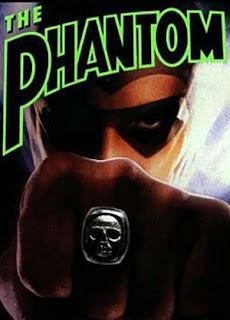
The writer's block phantom


Does writer's block exist?  No.  Are the plenty of writers who believe it does?  Yes.  Are they completely off?  Well, not entirely. 

This Phantom's real - writer's block isn't.

Here's the rub as I see it - if you're an experienced writer, you have a handle on your craft.  You trust your writing muscle, you trust your instincts.  You have that confidence because you've been commissioned before, you've jumped every hurdle, you've fought every battle, you've crawled through the foulest mud of development hell and you've made it through alive, stronger - and, ideally, produced.
   
Take the example of a marathon runner (and we all know that the marathon analogy fits writing like a glove, don't we!?).  The runner knows he's done the e.g. New York marathon - he knows he has what it takes.  He keeps in shape and, by doing so, can feel entirely confident about making it through the next marathon in one piece, too.  Same with scripts, same with us - we've done it before, we can do it again.

Writer's block, to me, doesn't exist.  In my case, a period of non-writing is a period when I instinctively know that I'm not supposed to write.  If it feels right, I write.  If I feel like writing crap, I write crap.  And if I don't feel like writing at all, well then I'll happily be the world-class procrastinator I love being. Basically, the trick is not to worry!  Trust yourself, trust your writing muscle.  Because, heck, we all know how it works - while we walk the dog, while we dust the action figures, while we re-sort our DVD collection - our writer's brain is nicely at work - things are-a-happening.  All part of the process.

But what about beginning writers, you might ask?  What happens if you don't have the body of work to give you confidence?  Well - take a good look at the title of the blog!  That's what'll get you there - write, write, write!  The more you write, the more you work your writing muscle, the more you learn to understand and use it (remember the marathon runner? He knows exactly when to slow down and when to haul ass).  And should you, somewhere along the way, feel that you've just been attacked by the dreaded writer's block phantom - just remember that - it - does - not - exist.  What exists is your writing muscle - it wants to and needs to grow - so work the damn thing and before you know it, you'll trust it.

10 November 2010

London Screenwriters' Festival

The screenwritorial extravaganza ran from 29 - 31 October and lots of folks have already written lots of good stuff about it. Should that stop me from writing some more about it? Maybe. Does it? Hell no!

I didn't plan on going to the LSF 2010, frankly. I was busy writing the treatment for what was to be a European co-production, big budget two-parter event movie. In short, not every gig works out - I suddenly found myself having a bit of time and decided to treat myself to the London Screenwriters' Festival. My agent, Julian Friedmann, suggested that I should be on some of the panels and suddenly the three days in London took on a whole additional level of intensity. 
                      
Day One
Walking into Regent's College the air was humming with anticipation. Lots of eager faces, some nervous ones - what to expect, what to say, how to behave, where to go, who to catch. But within the first few hours of the festival the whole gang practically became family. Easy connections were formed left and right, networking galore!  I was reminded of the first time I had walked into the Neighborhood Playhouse School of the Theatre, my NYC acting school. The moment I had entered that old building, I had utterly and completely felt at home.
  
The afternoon of day one meant a bit of action for me. A session called "Should I write a spec script?" had been on the program from the beginning and, having seen that, I had asked to be on that panel. I mean, how much easier could it get? Sit there, answer the title's question with a soaring YEEEEEESSSSSSSSSSS! and that would be that. The panel turned out to be far more fun than a simplistic answer would have been (although I did give that one). Great group of people on the panel: the very classy Kate Harwood (Controller Series & Serials BBC Drama), softspoken powerhouse Ollie Madden (VP Production Warner Brothers UK), cool operator Nik Bower (Investment Director Ingenious Media) and upbeat moderator Johnny Newman (very happening director/screenwriter).
   
Day Two
The second day gave me the chance to mingle and just enjoy the show. I loved Phil Parker's talk on "Writing for the digital world". I've run into Phil a few times over the years and he's always a very interesting guy to talk to. Hearing about making 200'000 pound a year with a 90 second clip on YouTube certainly caught my attention during the digital world talk. Heck, if Aardman needs ideas for the next Angry Kid YouTube sensation - call me! My afternoon highlight was the panel on "Writing for young audiences" with Gail Renard, Danny Stack, Chris Hill and one of my best buddies, Andy Briggs (when I grow up I want to be just like him).
    
Day Three
The final festival day gave me an easy morning and a packed panel afternoon. I had a blast being on the "Writing for the USA and European markets" with the writers
Barbara Jago and Andy Briggs as well as agents Steffen Weihe and Conrad Williams. Conrad had great fun moderating and I think we were able to show the audience that there are possibilities outside the UK. Especially as English language writers - the options are plentiful. Never easy - but the chances of kicking open doors are no harder in the US and Europe than they are in the UK. Between Andy and I we actually thought we might do a session on "working the room" next year. What do you do when you're in a room with a producer? What to watch out for? What to do and what to avoid at all costs? Being in that room goes far beyond pitching a particular idea. Andy's the natural - most writers could tremendously benefit from his knowledge.
       
My other session was possibly my personal highlight (although it did contain a bit of impromptu on-stage dancing on my part) - the session was "Crime writing" and was chaired by the brilliant
Barbara Machin, the brain behind "Waking The Dead". Also on the panel were Andrew Taft of "The Bill" fame and Rick Drew, a Canadian screenwriter who's created TV shows and he's been in the film business since working as a PA on the original Superman! We each talked about one particular crime series and why we think it's become an iconic, long-lasting show. I'll no doubt write more about this in some later blog. Now about that dancing bit. When we talked about the invidiual shows, we all brought a clip to give a bit more texture. In my case, I brought the legendary and terribly dated opening sequence of Germany's "Tatort", a hugely successful show since it started in 1970 (!) - it because is Germany's Holy Grail of crime shows. You must realize - these shows are part of German culture, history, part of every household! Every kid grew up with this... so when the stage went dark in Tuke Hall, when the sequence started playing and the opening music bounced off the walls - how could I NOT get up and dance along!?

Well I know one thing - this LSF wasn't my last LSF!

09 November 2010

Looking back and looking forward

Alrighty then ... the London Screenwriters' Festival has come and gone.  For many of us it was a jolt of sheer electricity up our writers' butts.  Sounds painful - but most certainly wasn't!  Among many other things, it made me deliver on a promise to myself - to start blogging.
        
Now this may be of zero importance to the rest of world - but heck, this is my blog and it matters to me and I'll tell ya why.  It's all about writing.  There's all sorts of writers, of course - but when you bring it down to the basics you have two kinds - you have those who write and those who don't.
         
Don't get me wrong - I love procrastinating as much as the next writer!  I can dust and rearrange my office like you wouldn't believe.  The art of procrastination is an important part of the writer's craft - if you understand how it works and if you have a good handle on it... otherwise it's just, err, procrastinating.  There are times when the words need to get on paper - they just have to and you feel it in your bones.  And then there are those other times when you ponder with dutiful concentration or trust your writer's muscle and play with your action figures instead.  The times when you don't, actually, write.
        
Which brings me to this blog!  This shall be, henceforth, one of my playgrounds where I write when I don't write ... you know what I mean, right?  Right!?
          
I'll blog about screenwriting, of course.  About my past work, current engagements and upcoming gigs.  So far, I've had seven of my scripts produced.  I've worked on three different series, I've adapted two novels ... and frankly, that doesn't sounds like all that much, doesn't it.  But, when I think about it, there's so much more there.  There's more than a decade worth of a writer's blood, sweat and tears experiences.  About abandoned projects, about finance hell, about network decisions, about producer meetings, about agents, script notes and countless drafts.  About retaining and constantly reclaiming the passion for writing regardless of what's thrown at you.  About taking a punch, about loving it, about playing God on paper - about being a writer.
      
... yeah, I do think I have a few things to write about.