14 July 2011

Notes for beginning screenwriters

I occasionally get asked to look at a script – and when I can grab the time, I’m glad to oblige. A few days back I did another one of those – I read the script, scribbled into it, put my notes to paper ... and realized that they contained many of the usual traps newbies fall into. So I’ve decided to publish the notes.
"Is it safe?" Hell no - and it never will be.
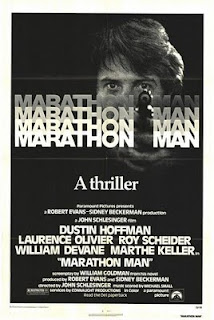
But if you grow your writing muscle, you'll
run the screenwriting marathons. 

I’ve of course removed all details, examples, suggestions pertaining to the script I reviewed. Hope these notes are of some use to other newbies out there. Here goes:

"If this is your first script – Congratulations! You've finished it, which is something most aspiring screenwriters never achieve – you've proven that you have the stamina and discipline – and I believe those two are more essential than talent and craft.

Now the potential downer – if this is your third script, you should be a little concerned. If this is your fifth script, you may wa
nt to consider doing something else. Your script contains all the classic mistakes of a first-timer. So again, if you are a first-timer, then this is great and you’re in the place you can expected to be. If you've written several scripts already, you should have learnt from every script written, from other scripts analyzed, from books, etc. All the first-timer mistakes should be gone. What are they in your script?
  • Write what the audience sees and hears – NOTHING ELSE. If what you write cannot be seen or heard by the audience – then it does not belong in your script (there are exceptions – but learn about those once you've mastered this rule).
  • Stay away from “on the nose” dialogue. The characters often say exactly what they do (in which case, no dialogue necessary) or what they think and feel – and that’s plain boring. In film, ideally, every line of dialogue has subtext, a different level, something going on beyond that which is being said. Generally for dialogue – remember, an ounce of behavior is worth pound of words. If you can say it without words, do so.
  • Exposition should never feel like exposition. We all know that certain information needs to be given – but you need to package that information. It cannot simply be stated. There is necessary and unnecessary exposition. The test is simple – if you can remove it and the story works just as well – dump it. As for the necessary kind - package it cleverly. Try wrapping it into a joke, an argument, a relationship fight, etc. Essentially – if it feels like exposition, you need to fix it.
  • Always give the audience as little as possible. This is a huge one – keep the audience guessing – don’t spell things out - EVER. Don't tell the audience things before or as they happen. Don’t explain – let the audience/reader discover, let them be wondering, worrying, on the edge of their seat. In every single scene, reveal only the absolute minimum – that way the audience stays glued and needs the next scene. Give the audience questions, not answers.
  • If it’s not essential to the story – dump it. You have several such elements in the story – they take up time, they don’t further the story. In essence, if you can cut it and the story doesn't change, then you don’t need it to begin with. You need to kill all such elements because they destroy the drive of your story.
  • Structure is important. Not all scripts adhere to the classic three act structure and that’s fine – once you’re an expert, you can play around. But as a beginner you absolutely must stick to the classic structure. If you don’t, every reader will see you as an amateur.
  • Start the story later. This happens all the time - to all of us. We always want to tell the whole story – but the fact is that stories are far more powerful if you start late in the game. Write down your full story in prose, by all means – then look at the middle of it and you’ll probably find a good starting point for your script.
  • The stakes must be as high as you can imagine (and then some). That goes for everything – every obstacle needs to be as tough as it can be. At every turn – you need to pick the toughest choice possible – the greater the obstacle, the more powerful your hero's journey.
  • Don’t preach – just tell the story. Whatever philosophy you may have – keep it to yourself and focus on the tale. If you've embedded it in your characters, the audience will get it. You need to trust that. If you do any sort of preaching straight out, it’ll be painful to the audience and they’ll emotionally walk out on your tale.
  • Focus on fewer characters. The more contained, the more intense it’ll be. Look for ways to reduce your cast, merge characters and bond them by giving them relationships. Also make sure that the good stuff happens to your heroes – no point in wasting great scenes on tangential characters.
Okay – that was just a quick glance and is by no means everything – but if you take a look at all of the above, you’ll be in far better shape with your story. All of the above is common screenwriting sense – but then it is also my opinion. Feel free to completely ignore, feel free to get a professional reader’s opinion. These feedbacks are always tough, but frankly, if they’re not, if they’re just pleasant, you can’t learn and get better at this crazy craft of ours.

Wishing you a great screenwriting journey!"

08 July 2011

How many hats are you wearing?

If you're a screenwriter and you're wearing the screenwriter hat and that's the only hat you have - you're screwed. To make it in this business you need to become good - very good - at wearing different hats.

Wear the hats and don't
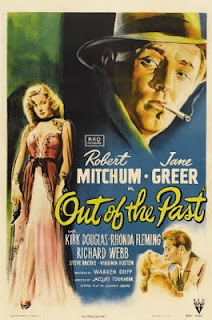
get too distracted by the dame.
If I'd have to rank the hats ... I wouldn't. Take the audience hat, for example. That one's easily as essential as the screenwriter hat. Let's take a look then, at the various hats:

Audience hat: When we sit in the movie theater or in front of the tube, we're all excellent at this - we're not just wearing the hat - we are the hat. We react to what we're shown, we all consciously or subconsciously know when a story is hurled off its track. We start checking our phones, we text message, we think about the bills, the messed-up relationship, the dirty laundry - you name it. As the audience, we know... it's interesting then to read so many screenplays where it's painfully obvious that the screenwriter has completely neglected to put on the audience hat. Fact is, there is such a thing as "too deep in the story" - you lose sight, you've lost the audience hat. When writing, I try to keep this a neat 50/50 - I try to sit back at every single scene and reflect - if I were sitting in a movie theater watching this - how would I react? How would I feel?

Salesman hat: This one's just as important if you plan on ever seeing your script come alive on the silver screen. Most writers suck at this, let's face it. We like to stink away in our cave, we like to be on our own in our baggy sweatpants and our 9th cup of coffee (I'm not describing myself, of course), we like to be deep within the worlds we imagine. That's where the magic happens ... but try put on the salesman hat and all of a sudden you'll be looking at things differently. All that "magic" crap is for the birds if you don't sell it. It's a product, man, a product! So think about that - where's the market? Who's the market? What's your business plan? How to do approach it? How will you go out there to sell your product, sell yourself, in fact? Because a script is just a script - one story - you're selling yourself - your type, your wit, your passion, your smirk. You're networking out there, not for this current script, but for the job in the future. This hat will not make you write differently - but it will influence certain decisions - and that's the way it should be.

Actor hat: You read them all the time, the scripts that hold the promise of a great story ... and fall flat because the characters just don't come to life. Some writers have a natural talent for characters, behavior and dialogue - but most are mediocre at best. I've actually discovered screenwriting via the acting route. I graduated from the amazing Neighborhood Playhouse School of the Theatre in New York with solid acting skills. It helps, a great deal. I not only live my characters, feel into them, live through them - I also put on this actor hat when I read and rewrite my scripts. I know what an actor will look for, I know the power of behavior over dialogue. The actor hat is invaluable.

Producer hat: This hat saves you a lot of hassles - trust me (and it includes all the sub-hats like the production manager hat, the designer hat, the costume hat, etc, etc.). Put it on before you start writing - what's the budget, what can be done, what can't be done. Think about number of locations and characters. It'll all inform your writing - it'll keep it crisp, it'll set frames, it'll exclude a whole host of great "what ifs", it'll remind you of script length and lots of other stuff that the screenwriter hat doesn't want to think about when he wants you to float off into magic story land.

Director hat: This one is one hat that you should have on your shelf, but you should only rarely put it on. Don't ever direct the script. But, the director hat is still important. Put it on when reviewing your script to see where you've directed against your better judgement. Then remove that stuff - all of it. You're good at what you do - so do that and allow the director to do what he/she's good at.

If the above sounds like mad hatter madness - heck, you want to be in the film business, right!? Madness is part of what makes this crazy business fun! Ignore the hats and you might as well stop your screenwriting journey now. 

Learn to handle the hats and you have a good shot at success.

02 July 2011

Just hanging around

I realize I haven't posted a blog in twenty plus days. Yeah, well, I was working and commuting and gaming and walking the dog and mowing the lawn and shopping and daydreaming and reading and hanging and vegging and and and ... and, oh yeah, I've been very busy writing a screenplay.

They may think you're a slacker, but you
know better - you're the writing Dude!
I'm currently adapting Craig Russell's most excellent thriller "Blood Eagle". It's dark, it's twisted, it's everything I love about a serial killer tale and I've just sent the first draft to the producers ... now it's wait and wait until rewriting begins ... but actually, that's not what I want to write about today. People ask me all the time about this "writing thing". How do I manage a day job, enjoy life with my wonderful family ... and still find the time to write screenplays?

If you're a newbie, this may come as a shock to you - most of your writing will not be happening on paper, it will be happening in your head. 

It doesn't matter whether you mow the lawn or pick up dog poop, whether you're buttering toast or roasting in the hammock. If you're a writer, you'll be - consciously or subconsciously - always connected to that fictitious story world you're currently living in. Regardless of what you do, where you are, who you're with - your story is always with you, your characters are buttering toast with you (I wish they'd pick up the damn dog poop instead, but I digress) ... There you have it - what may appear to be "just hanging around" to others is, in fact, a large chunk of what your screenwriting profession is all about.

That get me wrong - as a newbie you should be practicing the actual writing bit every single day. It builds your writing muscle and prepares you for when that first contract rolls in. Many pros will tell you that you don't start writing the actual screenplay for months after the official "go" has come. I wouldn't want to put a time frame on it (sometimes the deadline's are ridiculously steep) - but the fact is, when you have a story in your head already, every moment you spend NOT writing is time well spent. That's the time your characters are free to roam, to explore all the countless glorious "what ifs". That's the time you'll get flashes of scenes, snippets of dialogue, ideas for locations. That's the time you'll scribble things on a napkin and toss it in a drawer.

And you'll know when the moment's arrived, the moment when it feels right to bring it all together and put it on paper. You'll open that drawer, packed with notes by now, and you'll open your mind and choose everything that most excited you during all that time of "just hanging around".

I'm a great believer in the necessity of procrastination. Done right, it will never be a waste of your precious writing time. The one thing you must do is to put yourself on a story path first - pick the story, the characters, the inciting incident - see the world your story will be set in ... and then trust yourself that the story will be with you, percolating, from that moment onward. Procrastinate away, folks.

PS: Please do use your common sense. If you're still procrastinating six months after reading this - you may want to take another hard look at carpentry instead.