29 January 2011

It's about collaboration, it's about people

In the last post I went on about two of a screenwriter’s essentials ingredients, discipline and stamina. There's more, of course, like the not entirely irrelevant talent and craft … but this time I’d like to yack a bit about an element of salesmenship - the human side.

It takes more than one to hit the jackpot.
You’re a screenwriter, not a novelist. Our ultimate goal is a completed film, not a completed script. And we can’t make a film happen on our own – it’s all very much about collaboration, it's very much about people.

Treat the people you meet along the way as you would want to be treated yourself and you’re already on a good path. I know this sounds ridiculously obvious – but we all know that writers most often prefer their solitary writer’s cave to a room full of people. If you’re not good around people, learn it. Learn the craft of salesmenship same as you learn the craft of screenwriting. The better you get at it, the more likely you’ll become a professional and commissioned writer.

This may be naturally fun for you (and it should be) – or you may have to learn to make it fun first. But learn you must. Learn to deal with the people you may soon be working with in a friendly, engaging, social way. Get to know them. The better you know them, the more at ease you are around them. Pretty simple, really – we’re always more comfortable with what we know.

Case in point – I’ve met with a three folks from a production company yesterday. See? I didn’t not write that I had a meeting with a production company. I met people, human beings. The have likes and dislikes, good days and bad days, ups and downs same as we do. They are, just like us, people who want to collaborate to make a great film. I’ll talk about pitching in another blog – for now - here's what happens when you're just being nice, social, a "people person":
  • One of the women at the meeting has her own blog, we’re also hooked up via Facebook and Twitter – we’re always up to date on what the other does. With a simple bit of virtual networking, today’s meeting with her was as close and relaxed as if we’d be hanging out together all the time. Networking, in real life and in the virtual world – do it! It's fun and it makes a world of difference.
  • For the meeting I had to take a flight and was picked up by a driver. Who do you think arranges this stuff – machines? Nope, again, they’re people like you and I. People who like to be noticed, appreciate a smile and love a bit of recognition same as we would. I brought both the driver and the assistant who booked the flight a box of Swiss chocolates. Did they appreciate the gesture? Well, wouldn’t you? 
  • One more thing about the driver. I didn’t know this driver – so I asked for his name - next time I meet him I’ll be able to surprise him with a friendly, personal greeting. Overall, it's just nice to be nice. But in addition drivers, same as assistants, tend to know a lot of stuff – they’re around the producers, the directors, the actors of different productions. It’s not only nice to chit-chat a bit, it can also be very much relevant to the business you’re in (yep, screenwriting is a business). 
To make a long blog longer – always remember that you’re dealing with people. With very little effort you can pave the way to a great collaboration. Be nice, be social - and don't be manipulative about it. Do it because it's the right thing to do, the fun thing to do - and you'll end up reaping the benefits, trust me on this. Next up – a few words about being “in the room”.

27 January 2011

So you want to be a screenwriter … do you have what it takes?

Anyone thinking about a life (note: I did not write “career”) as a screenwriter should have an inherent passion for film. You should essentially be a film geek. You should also have a very basic need to put your ideas to paper. You should literally be unhappy whenever you cannot write down those ideas.

Without discipline and stamina - he'd still be in there.
It goes without saying that you have ideas. But I have people coming up to me all the time with ideas – “I have a great idea for a film!” Ideas are like pebbles of sand – countless and useless on their own. Whenever somebody starts with the “I have a great idea” bit, I usually listen politely, then politely tell them that they should go ahead and write the story themselves (they never do). Fact is, I’ll be swamped with my own ideas for the rest of my life … but that’s not the point.

The two most essential elements for a screenwriter are discipline and stamina. Only then come craft and talent.

You can learn the craft and you can become a reliable, prolific writer without being the most talented one. But you will never be a true writer unless you have the aforementioned discipline and stamina.

Before you get hired to write, you need a body of work. So start writing. Now! Write every day – develop the discipline to write daily – write your own script, finish it, write the next one, finish it, write the next one, finish it. Finishing is important! Most of those people with "great ideas" won't EVER finish a screenplay (and thank God for that – more business for the staminators among us). By constantly writing you’ll grow your writing muscle and your body of work. You'll also increase your stamina, you'll start to believe in yourself. And you'll need every bit of stamina to get you through the hunger years.

People will hurls all sorts of stuff at you - mostly rejection. But if writing has become an essential part of you, nothing will be able to stop you. Constant rejection will still hurt, occasional crumbs of hope will still tear at your insides, but you will always continue to write. And all of that will get you in shape for the time when that producer’s door suddenly opens. You’ll get hired and you’ll need to deliver on time – the deadlines will be madness sometimes – but if you have discipline and stamina on your side, you'll be able to handle every challenge.

All the talent in the world won’t help you unless you have the discipline and the stamina to deliver on the promise of your talent. So - you have the stamina to swim across the Atlantic? You have the discipline of a world class Olympic athlete? Good - almost there then – in the next blog we’ll work on your salesmenship!

25 January 2011

An ounce of behavior is worth a pound of words

Dialogue’s quite often a problem for screenwriters. Too wordy, too “on the nose”, too stilted, too expositional, yadayadayada. The craft of acting helps. I’ve had the great fortune to attend and graduate from the acting school that brought forth talents from Sydney Pollack to David Mamet and from Gregory Peck to Robert Duvall.

Another Playhouse actor of few words
What fantastic school was this, you’re dying to ask, right? It’s one you’ve probably never heard of – it’s “The Neighborhood Playhouse School of the Theatre” in New York. Sanford Meisner and Lee Strassberg were both part of the famous “Group Theatre” in the 30s. Strassberg went on to form his own Actor’s Studio with his “Method”. Sandy Meisner took a different turn, created the “Technique” and brought it to the Neighborhood Playhouse.

When I was at the Playhouse in the early nineties, Sandy was still alive and still a monumental presence in the tiny gnarled body of an old man. And the sign on the wall of our classroom reminded us every day that “An ounce of behavior is worth a pound of words”. Acting is not about talking, it is about doing. Obvious enough, right? And yet we writers cram dialogue upon dialogue into our scripts. Of course you need some of it – but always remember the title of this blog – it’s an ultimate truth, for film, for actors, for the audience.

Just think, you’re watching a film. The old man on screen just lost his dog. The mutt got run over by a car. Now the old man tells you how sad he is… which is entirely lame, of course. As screenwriters we should always think visual (another obvious), we should also always think “actors” and “audience”. The scene with the sad old man might be:
  • A small mound of earth in the garden. The OLD MAN exits the house, stands on the porch with the dog’s leash. He WHISTLES, smiles – nothing happens. The WIFE steps out and puts her hand on his shoulder, gently shakes her head. He looks at her in confusion.
  • The OLD MAN on the street, holding the dead dog, staring after the hit-and-run car disappearing around the corner at high speed. Holding on to the dog, trembling.
  • The OLD MAN sits down heavily at the curb, staring at the lump of the dead dog in the street. Completely in shock, he doesn’t even realize the people running toward him, crowding him, trying to talk to him – he hears nothing. Then the dead dog rises and walks to him, tail wagging – the old man smiles.
Countless options! And yes, there will also be good options WITH dialogue. But just remember, good actors want to act, not talk. And whatever emotion you want to convey will comes across ten-fold stronger if you convey it through action instead of dialogue. There’s a nice little John Wayne anecdote – admittedly, not one of the greatest actors – but a very screen-smart star. Apparently, whenever reading a script, he would shift the dialogue bits to his co-stars and make sure he would get the silent reaction shots. Smart move. Let the others talk – I’ll have the strong moment instead! And that’s the one that will stay with the audience. Always remember: 


“An ounce of behavior is worth a pound of words.”

And if anyone ever asks you about an excellent acting school – trust me - there's nothing better than the Neighborhood Playhouse School of the Theatre and Sandy Meisner’s “Technique”.

23 January 2011

Which stories deserve the silver screen treatment?

I’m not talking about Hollywood producers here – because for Hollywood anything that promises another mother lode is worth the royal treatment. And if Hollywood hires you to write for a franchise – good for you! But if no one is calling, if no one is waiting for you, if you’re just sitting in your cave and typing away at your spec script  – you want to be one thing – you want to be original.

An original take in many ways
But what the hell's original these days, you might ask. Hasn’t everything been done? Hasn’t every twist been twisted, hasn’t every tear been cried, hasn’t every button been pushed? Well, if you think that – go home, give up writing and re-enrole in that accountancy course. There’s plenty of originality to be had – and often it comes from mashing, merging, combining and twisting bits and pieces from existing material. No different from the world of songs where musical notes are constantly rearranged in countless new variations. I've come across one such variation original today - "Rubber" - basically "Attack of the Killer Tomatoes" - but this time the killer's a car tire ... say what you want about this particular idea - but it certainly is original! 

You’re a writer – you’re a lover of films – you’ve seen more films than any of your friends. You live and breathe films, you know your trivia and quote film dialog as if they were your own words. Let’s face it – you know a lot about film … and there you have it – that should be your testing ground. When you have an idea for a spec script – think. Is it original? Is it something you can honestly say you haven’t seen in all-too similar ways on screen before? Is it truly a unique take on a subject? Is it a unique point of view? Is it a unique character? That should be the starting point for you – if you have an idea where you can say, to the very best of your knowledge, that you’ve never seen anything like it – you’re on to something that might some day make a worthy feature film.

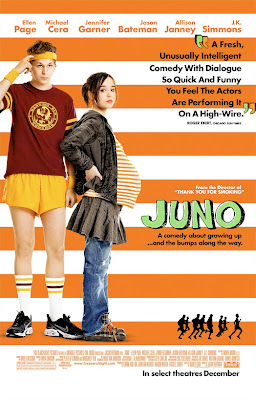
Producers, studios or indies, will always look for “original”. Now this doesn’t have to mean “Avatar” – you don’t have to create new universes to be original. Take “Juno” – what made it truly original was a unique look on teen pregnancy, a unique character with her very own way of looking at life, facing challenges, interacting with friends and family. And, lest we forget, Diablo Cody’s very distinct writing. It made a small story truly unique – and definitely deserving of the best screenwriting Oscar.

Again – always ask yourself – before you spend a year working on your spec – is it original? Have I ever seen anything like this before? Is it a truly unique take? If it isn’t, you'll still gain experience, you work your writing muscle, you may even get it made as a TV movie... but it won't get the silver screen treatment.

22 January 2011

Get with it, genre haters!

You know the ones I mean. You’re in the middle of talking film and suddenly someone blurts out that they hate horror, or scifi, or western, romantic comedies, whatever, and would never watch that stuff. With a single statement they brush aside an entire world. Now that’s just a personal flaw in most instances – but when that person is a screenwriter, I get the instant urge to slap a bit of sense into that writer.

I may not write it, but I'll go there!
Genres and sub-genres are like countries with their very distinctly different laws and landscapes. If your average tourist says, e.g. , “I don’t care about Ivory Coast and will therefore never travel there”, not much is lost. That individual has simply chosen to exclude a particular part of our world from his/her life experience. Most likely, that decision will not impact that person’s professional life. But if you’re a writer and you exclude an entire genre – you are, in fact, messing with your profession, your craft, your goals, your future, you’re messing with what you might one day become – the best there is.

I currently have no intention of ever writing a “romantic comedy” – but watching them? I have enjoyed some of the most charming, brilliant, wonderfully crafted romantic comedies. I laugh, I cry, I’m entirely happy when the inevitable moment comes, when the two, despite all those carefully crafted odds, finally end up together. What I’m trying to say is – wherever your voice may lie, whatever your preferred writing genre – never exclude entire other worlds – you learn from those just as much – even more!

Every genre offers great stories (and myriads of terrible ones). My suggestion – if you have a particular prejudice against a particular genre – do the research, and rent ten or twenty top reviewed films of that genre. Even if you can’t stand getting scared and have stayed away from horror for that very reason – get over it! Rent them, watch them, get scared – then analyze and learn. You’ll probably still never write a horror film – but the professional writer in you has just become more rounded, more experienced, more versed.

Learn to not think “genre”, but “story” instead. As a writer, you couldn’t possibly want to exclude yourself from some of the greatest stories ever told. So in whatever genre-country those stories may sit – take the time to journey there – take in the scenery, take some pictures and come back an even better writer.

Enjoy your trips! 

16 January 2011

First script - give yourself a chance

Learning the  craft of screenwriting takes time and patience and tremendous discipline. And then when you actually write, when you're in the middle of a script - it's the most exhilarating place to be in the world - so yes, it's all worth it! Are you just starting out? Here's my tip - don't kill yourself - give yourself a chance by starting small.

A beautifully imagined small world
Writing a good script ain't exactly easy and that's why the web is flooded with how-to tips, books, courses, gurus and consultants. When it comes to that I have my own little basic how-to offering right here - don't worry, it's painless and doesn't cost a cent. Learn to be scizophrenic about being a professional writer - be a dreamer on one hand and believe that you will, one fine day, be a successful writer. On the other hand - be a realist and know that the chances of this ever happening are just slightly better than winning the lottery - but that's never stopped a dreamer, right!?

The dreamer in you will want to tackle the Civil War, mankind in the 3rd millenium, Hiler vs Aliens and the sabotage of Cape Canaveral - or some other vast world. If your passion lies with something huge like that - then by all means - write your passion! But the realist in you should understand that you do stand a better chance if you start by creating a small, contained world. Every professional reader will tell you that they can instantly spot it if a writer doesn't know the world he or she is writing about. Researching the Civil War or the inner workings of Cape Canaveral will take months and months - and that can seriously slow your flow (and the joy of it) when you're just starting out.

For your first script, create a world the size of a room, a house or a village. Seriously - think about it. Try and write scenes in your room - try to squeeze the most excitement / drama / thrills / mystery / laughter out of that one room you know so well. Trust me - the fact that you know your room inside out will show on the page. And that's just one thing - of course a small world is easier to research. But a small world also narrows down the creative options and that's greatly helpful, too. Just imagine a room with a thousand doors, a village with a thousand homes and a thousand families. "What if's" galore! Countless options that can block your flow ... Now imagine a room with just one door, or a village with seven houses ... the options narrow. It'll still be a challenge to write a great script - but within a narrow frame such as that, your chances of actually finishing that first script are excellent.

Important to remember, by the way - your first script is about writing, about learning - not about selling or picking up the Oscar. It's about learning the craft, having fun and reaching that wonderous moment when you write "The End".

14 January 2011

"Write what you know" - what a crock!

That's one thing they'll always tell you when you start out - "write what you know". Seems to make sense, after all, you'll be writing about something where you have a set of insights. But beginning writers take this far too literally. Just because you're a nurse doesn't mean you're limited to hospital tales. "Write what you know" simply means - or damn well should mean - "write where your passion lies".

Could the writer have possibly made it up?
If you take it literally, we wouldn't have SciFi movies - to put it eloquently - no one knows diddley when it comes to SciFi - we just make it up! That's story telling for ya - we make up stuff! Have we been in space? Have we battled aliens? Or, in my very own thriller-writing case - have I serial killed my way around town and now draw inspiration from my many bloody real-life adventures? Of course not - it's all "just" story telling, make believe, using that good ole imagination bit we're supposed to be having in abundance.

"Write what you know" = "Write where your passion lies" ... if that passion is with SciFi, then that's what you should focus on. That will be your best chance because your passion will show up on that paper. Even if it's raw, even if "polished" isn't even in sight - if your passion is in that script of yours - you can bet your next screenwriting commission that film biz people will recognize it.

But back to the hospital for a moment. If you are that nurse and you have a passion for it - then by all means write your hospital script. You'll have the double whammy - passion and experience - no research required (that is, actually, the only benefit you have from the literal "write what you know").

I absolutely believe that I can write whatever I am passionate about - and that goes for every single one of us writers. Tell you the truth, most pros can write in any case, passion or no passion - but that's another story.

Give them as little as you possibly can

When it comes to information, we screenwriters should be Ebenezer Scrooge at his stingiest. This is no mystery to any of us - you don't unload information by the shovel, you deliver it with the tiniest little espresso spoon you can find (actually, even better, use a fork).

Where is she?
You'll probably read about this in every how-to-write-a-screenplay book. Give the audience the very minimum of information. Just enough to keep them needing the next scene, to keep them guessing, to keep them glued. Hand out too much and people will walk off to get another beer from the fridge ... not exactly what we should aim for as writers. If you really want to keep your audience in the story, be as stingy as you possibly can with what you know and they don't.

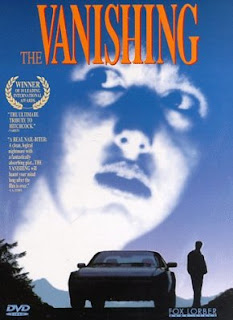
Why is that writorial stinginess so relevant? Essentially because it is a very basic human desire - we always want to know, to understand, to make sense. "The Vanishing" was brilliant Dutch film that played with this human need to great effect. The flick got the Hollywood remake treatment a few years later, same director and starring Jeff Bridges and Kiefer Sutherland ... don't even get me started on that one.

The Vanishing: Rex and Saskia, a young couple, are on vacation - at a service station Saskia disappears. She's simply gone. Did something happen? Did she leave Rex? For years Rex looks for her - he finds nothing - he knows nothing - he has nothing to hold on to - he goes almost mad. Then, after several years, Rex is contacted by a stranger who claims to have abducted Saska back at the service station ... and he says he will tell Rex what happened to Saskia, but only if Rex agrees to go the same way she went. And that means he will have to take a sleeping potion... that's all I'll say - if you haven't seen it -pick it up, well worth watching. And it is all about that infernal not-knowing.

With every scene you write, ask yourself: Did I give them (the audience) too much here? Can I give less? Do I absolutely have to reveal this bit to be able to move the story forward? Can I keep them guessing just a little while longer? Less is definitely more. Stick to this and you're on a good path. Now you'll just have to figure out the bit about what exactly to reveal when exactly and that, I'm afraid, will never be simple.

11 January 2011

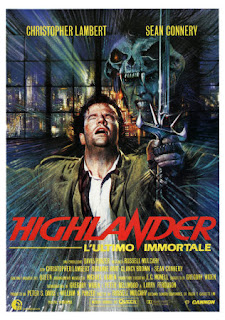
Highlander and the test of time

To make it clear right here and now - Highlander, a favorite of mine in the eighties, now positively sucks. What do I want from films? I just want a good story told well. And Highlander is a good story told, well ... what a let-down when I tried to relive that particular 80s cinematic joy.

Not exactly like good wine
Makes you wonder - why do some films stand the test of time while others become unbearable, laughable, or just plain boring? A good story helps for sure. SciFi and Fantasy are tricky as FX gets old so damn fast these days. Universal drama will most likely also age well as it usually doesn't rely on special effects and pop culture references (the stuff no one understands a generation later). Comedies are difficult, too - but possible. His Girl Friday and It Happened One Night - ancient as they may be - still work like a charm. But take Bill and Ted's Excellent Adventure ... watching it now isn't worth a single chuckle (not even George Carlin).

So what "went wrong" with Highlander and what could have been done differently to keep today's generation glued to the tube. For one, actors - good actors do of course make a difference and both Christopher Lambert and Roxanne Hart hammed their way through the whole thing. Looking for real moments? Not from those two! I'll be the first to admit, though, that this didn't bother me one iota back in the 80s. It certainly helped that, back then, it was far easier to dazzle audiences with special effects. Who had time to emotionalize with actors when there was all that head-chopping-lightning-windows-exploding stuff going on?

Today the Highlander effects are beyond antique. So if you want to create a film that stands the test of time - don't rely on special effects to tell your story. They're cool, they're fun, they're exciting - but only for a glimpse in time. Case in point - take Star Wars. When the entire planet of Alderaan is destroyed, the excitement level remains at subzero today. But when Luke and Leia do the old-fashioned swinging across the missing bridge thingie, when the garbage container walls close in on all of them, or when they do the time-honored saber-fighting - all of those still work. Those are, frankly, down to earth, simple - in the context of a SciFi tale, sure, but very much grounded - and that's why they'll never get old.

Can we, as long-time writers or greenhorns, worry about this? Do we have the luxury? Probably not. We'll always be scrambling for that first or next job and we'll be thrilled to get it and we'll do our darndest to make it as exciting as possible. That "test of time" thinking probably won't enter ... but then again - maybe it should. Maybe it would indeed improve our stories if we were to think away the current times and focus on the core, the universal tale - the bit that'll still work for audiences 100 years from now.

08 January 2011

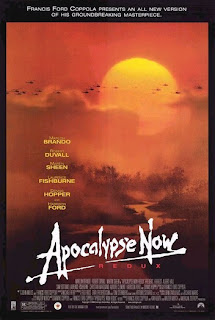
Francis Ford Coppola's great big bowl of dough

I've been deeply in love with films from the moment I first stared into the flickering lights of the TV and got caught up in duels, embraces, kidnappings, dances, battles and riding off into the sunset with the Duke. I'm in the business myself these days - that makes me no less fanboy-geeky about it all.

Made with pasta dough
E.g., when I met Roger Spottiswoode and he told me about the time on the shoot with Sam Peckinpah on "The Wild Bunch" - I was just grinning stupid I was so happy. Now on to the Coppola-Meister. Some of his movies will always be within the top films of all times. This morning I watched a little clip where he explains his creative process. I love the idea of the "great big bowl of dough" he uses. And yes, the fanboy in me was smiling when I watched the man explain the ways that, in his case, led to movie magic more than a few times.

Being a screenwriter, I love watching things as much as I love reading them. I love words. And, after watching FFC, I thought I'd actually want to preserve Francis' take on the creative process in a written post ... so feel free to watch it - but it's worth reading, too. And here then, for your reading pleasure, the words of Francis Ford Coppola:

"I'm most interested in the writing part, because that's the - ... I feel very confident that I can do production, I can make the film look good, I can have beautiful photography. Even if I can't afford big stars or actors, I can find new actors. I feel very comfortable and confident about that. Where I'm the least confident, the most insecure, is the writing because this is what I always considered - as a young person - I wanted to be a writer.

I have been writing ever since I was nineteen, eighteen years old and always felt, oh, I have no talent as a writer, I wish I could have talent. I think writing is one of those areas, acting is another, where, if you're not very good at it, if you try and work and you try and you write and you write and you write, or you act and you act, you can actually get better.

The way I write is like I have a great big bowl of dough, pasta. And I'm writing and, you know, once in a while I take some and I make a pizza, or I make a cake, or I make something. But it's all the pasta of my life, all the ideas I have. Something I saw, or a dream, or an observation. And the important thing is that it doesn't have to be a whole developped idea. It just has to be like a seed. And then, when I'm ready, I will just work on it every day, maybe in the morning because the morning is a time when you're very rested.

And then when I have, you know, whatever it is, maybe sixty seventy pages, then I'll read it. Then what I like to do now, I like to take it and write it as a short story. And the reason I like to write it as a short story is because I look at it from another way. And in a short story you're able to say things that you can't say in a screenplay. And very often, I just - one thing I've learned - write the ending. Cause the ending is obviously very important and is where everything has to go. Otherwise, if you don't just write the ending, then you're gonna be saying "Oh, I don't have an ending."

Very often I leave it as a short story and I even show it to my colleagues as a short story. And then we go and we look and we talk about the actors or we go look for locations, whatever. But we only have the short story. And we find locations - and sometimes the locations are very unusual and you say, wow, we could really use that. And you know that notes are important. And then, when we're starting to get closer, then it's time to write the screenplay. So in the screenplay I can incorporate some things about the actors we thought about, or the locations - at any rate - now is the first time that I translate it all into a screenplay. That's more or less my process."

06 January 2011

"Once" upon a small story

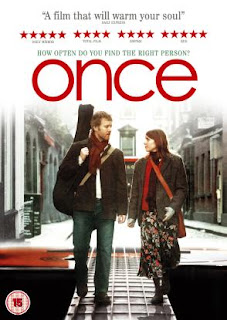
Small films are a great way to break into the business. As a writer, director, producer, you work your butt off, you save all your pennies, you write a "small" story and you're rolling ... or not. You're probably wasting every ounce of effort if you think "small". One film that managed to get it all just right was "Once".

A small film, a simple story
"Once" is a whimsical musical tale about a week in the lives of an Irish street musician and an immigrant girl, their passion for music ... and love trying to find a way. It's a simple story, shot with a tiny cast and practically no budget (about 150'000 US)... and it soars. Why is that? And why doesn't this kind of magic happen more often? Seriously, this is the one relatively possible way to go for young, unknown, struggling filmmakers. Everything else just gets exponentially harder to pull off. So why don't we see more "Once"-like films?

There's the saying "There are no small parts, only small actors." Same goes for the rest of us. If we think small, we are. If we think of "small" as unimportant, not worth aspiring to, then that's exactly what we end up with. All too often "small" and "simple" have a negative connotation. In fact, though, "simple" means, or should mean to all of us in the film business, "core".

"Core" isn't easy. Getting to the essence isn't easy. But once you've found the core, the simplicity of it will shine as much as it does in "Once". And that's the "simple" you want to look for - that's the "simple" that will allow you to make a "small" story that just might give you the break you've been looking for. Sure, "Once" had outstanding musicians and their original songs. Songs that just carried you from scene to scene and stayed with you. But if you have your core, your shining simplicity, your small story doesn't need any of that. It will stand on its own and it will touch your audience.
   
Like I said, it ain't easy - but "simple" is definitely worth aiming for. Man, I'm tempted to start looking for such a "simple" tale right now, dive in, explore. Alas, I have a serial killer novel to adapt - there goes simplicity!

02 January 2011

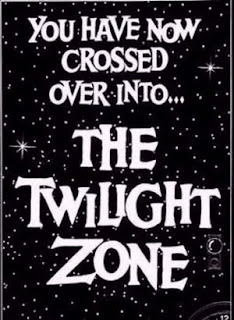
The Twilight Zone - enter if you dare

If you ever find yourself in need of a spark of creativity, a kick of imagination - then I can only suggest you enter The Twilight Zone. My all-around-brilliant wife presented me with the complete definite collection of The Twilight Zone, a whopping 28 DVD pack containing all of Rod Serling's 156 episodes. Do yourself a favor - get them!

"There is a fifth dimension beyond that which is known to man. It is a dimension as vast as space and as timeless as infinity. It is the middle ground between light and shadow, between science and superstition, and it lies between the pit of man's fears and the summit of his knowledge. This is the dimension of imagination. It is an area which we call the Twilight Zone." Thus the opening narration of every episode ... and each and every episode truly does take you there.

I'd seen many Twilight Zone episodes over the years - but never the lot of it. As I watch them now I see countless iconic actors early in their careers. I see episode after episode stacked with brilliantly inventive ideas - they've made best use of what they had available then and, because the stories are so well written and presented, they're as inspiring now as they must have been mind-boggling then. And if you think this ole black-and-white stuff is probably more than a bit dated - think again! Even my teenage kids love watching them - and/or love listening to me tell them individual episodes.

When you watch The Twilight Zone, you'll also discover many familiar elements. You'll soon realize that more than one generation of screenwriters have borrowed again and again from the series. They've taken sometimes entire concepts, sometimes just bits and pieces and built them into their own stories... nothing wrong with that, by the way - I wrote about "stealing" in this blog > Stealing allowed - De Niro style.

So there you have it, folks. Ring in the new year with a creative explosion. I dare you to enter ... (wait for it ... wait ... now it comes) ... The Twilight Zone. Just had to say it - can you blame me!?