17 June 2012

A cautionary pitching tale

I've written about pitching before - I'll never be as good at it as I should be - but I'm pretty good at handling my nerves, at relaxing in the room, at listening. Click here for more on that

This post is really a cautionary tale for those sitting across from us when we pitch. Here's great little film, chamber piece, eight minutes - well written, well acted, well executed. Worth watching!

"At a screenwriters' pitch event, a vengeful writer turns the tables on an arrogant studio executive, ordering him at gunpoint to pitch a good story or die. As the clock ticks down, the exec gets a lesson in truthfulness and storytelling, but will he learn in time to save himself?"


11 June 2012

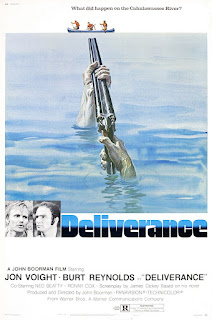
Deliverance: James Dickey's experience

You remember Deliverance, don't you? James Dickey wrote the novel and was hired to also write the screenplay for what would become a classic... it's just that, James Dickey had no idea how to write a screenplay and was far from happy with the final result.

Dickey's Deliverance journey
Dickey went from being an WWII fighter pilot to becoming a celebrated American author & poet, winning numerous awards for his literary works. I've read that it took him ten years to write "Deliverance" ... no wonder that, when he was given the chance to adapt his own novel, he said yes. Seemed like a great way to ensure that a film would do justice to his original work.

I have the printed original first draft screenplay on my shelf, published by Southern Illinois University Press. It contains a very unusual script, as delivered by James Dickey - and it contains an equally interesting afterword by the author himself. As for the script - Dickey was no screenwriter and he clearly wasn't comfortable with the crisp, razor-sharp clarity of scripts - he chose to write, not surprisingly, in a far more expansive way.

Reading the below "Afterword", it should make every novelist think at least twice before considering to adapt their own work. But there is food for thought for screenwriters, too (I'm highlighting some of that). Well - here goes, here's the transcript - in full - enlightening and sobering in equal measure.

Transcript of James Dickey's "Afterword":

"When it was first resolved that Deliverance would be made into a film, I was engaged to do the screenplay. Outside of two small documentaries I had written for the government when I lived in California, I had no experience of film writing, and certainly non in the area of "novel-into-film" that, together with much horrifying evidence, I had been led to believe was a king of ossuary or elephant's graveyard of the integrity, trust, and efforts of a good many novelists, some of whom I knew.

To begin with, I had no idea of format, and I asked the functionaries of Warner Brothers to send me some sample scripts, which they did. Among these I remember "A Clockwork Orange", which seemed unduly skimpy and altogether too easy, this sort of thing was not at all in line with what I had in mind to do. 

On the other hand I had been told that James Agee turned in - preliminary to the final shooting script from which the films were made - long, almost excruciatingly detailed "treatments", which were "as good as literature". That was more like it, I thought, so I got hold of "Agee on Film", volume 2, and read the treatments very carefully. I came up somewhat confuse, though with much more of an idea of the procedure I wanted than I had had. I could not see any reason why the film script, or the treatment, should not be a valid art form in itself; I did not then and I still do not.
Since the writer of screenplays, particularly in the earlier stages of the development of material, is quite literally not limited by anything, he is free to visualize in ideal terms the story as he would like to see it: that is, his ideals as they have always existed in connection with the story, or as they develop from instant to instant as he works. With this in mind, and with the eye of imagination making the movie I would like to see come up on the screen shot for shot, I opened my novel and began.

There was no reason to suppose that the sequence of events in the book needed to be altered in any way from what it was on the page; the main concern was the transference of the essential story from one medium to another, and so the writing of the treatment because an intense and extremely stimulating sort of game in which, with a camera in the hands of God rather than those of any mortal cinematographer, I wrote the scenes one after the other as I would like to have them be, all things considered sub specie aeternitatis, and with completely unrestricted resources, some from the actual world and some from my mind, imagination, fancy, or somewhere else private but accessible.

The story had been with me for such a long time, and I felt that I knew each detail of it with such intimacy, that nothing anyone else could do could bring a dimension of understanding to it that I could not easily better. Perhaps this sort of egomania is necessary to creation in any form, but one is particularly susceptible to it when turning one's own material from a medium which may reach a few thousand into another which may reach millions.

The only thing to do, I thought, was to go ahead with the treatment on my own terms and see what happened. But the idea of creating a work in the medium of the film treatment that would stand on its own as a work of art, utilizing the techniques and qualities of the medium, underlay my intent from beginning to end. An audience capable of both reading the novel and seeing the movie was being offered two versions of the same story, and I hoped that, with luck lasting, these would strengthen, enhance, and deepen each other, so that the overall experience of Deliverance would be just that for the beholder or participant, and would say certain things to him. 

For this reason, I tried to visualize every nuance, every flicker of light of every scene. I left almost nothing to the actors - to whatever actors there would be - to the director, to the cinematographer, to the sound technicians, or even to the safety crew on the river. I had Platonic, ideal conditions, and no one to tell me what I had done wrong. I had a thousand ideas I thought not only workable but positively inspired for every scene, every camera angle, every movement, every transition, every fortissimo or diminuendo or sound, every change of chord in music, every birdcall. 

When I sent the completed initial screenplay, the one found here, to Warner Brothers, I was convinced I had put down on paper what I wanted to have happen on the screen, no matter who the director was, or the actors, or any of the rest of the crew. After all, it was my story, and no one else on earth could know it as I did.

The various details of what transpired between my starry-eyed completion of this screenplay and the actual 105 minutes of running time of the released version is not the intention of this Afterword to record. But I feel I should say what a good many other writers must have felt and some perhaps have said. The writer quickly discovers that, well-intentioned as he is, as intimately involved as he may be with his own story, or whatever commitment either artistic or emotional he may have in the transference of his material to the screen, his opinion, after a certain quickly-reached point, will not count for much.

The first thing he is told by any number of people is that, through his story is "film material", and through he is supposed to have credit - or a credit - for the script, he himself does not "know film". Sadly this is true; he does not know film and he realizes little by little and then more by more that he is not going to learn film, either, to his or anyone else's satisfaction during the time that his story is being made. The essentials of the writer's situation are these. First of all, he has sold his material to the film medium, and consequently and presumably to those who "know film". It is useless for him to speak of his ideas for a scene; an opening scene, say. For such and such a reason, he is told, such an idea is unfeasible. He is told that specific scenes cannot be filmed as he wishes them to be because of considerations know to the makers but unknown to him, and these are never sufficiently explained, or at least not plausibly. 

By the time the film begins to move into the actual production process, the writer has begun to feel like the pig in Randall Jarrell's parable of the Poet and the Critic. The filmmaker, like the Critic, like the judge of pork at the county fair, says to the pig-poet-novelist-screenwriter as he pokes him contemptuously in the ribs, "Huh! What do you know about pork?" Though he is, unfortunately, pork, the novelist can in fact find little by the way of answer. 

The director first, then the actors, then the technicians and other functionaries set things up to be filmed in a way which is congruent with the director's version of the dramatic and scenic possibilities of the story and whether or not this is consistent with the writer's is strictly immaterial, irrelevant, and in the end something of an embarrassment, at least to the writer. Details are changed, whole sequences are changed, dialogue is altered or improvised until, through something which resembles the original idea of the story remains, the texture, the field of nuance, the details, the characterizations, dramatic buildup and resolution as originally conceived, are lost, nothing but the bones are left.

The writer wanders around the set, among the bones, wondering with vague but fascinated impotence what is going to be filmed that day, what compromise or invention will be deemed necessary. There is a certain amount of interest accruing to this position, but eventually the role of faintly-embarrassing specter gets as old, predictable, and tiresome as any other, and after some time spend in this unprofitable way and after seeing his own opinions, suggestions, ideas, convictions, his notions of psychological and dramatic propriety as the first considerations to be dismissed in favor of approaches he believes not only hopelessly but even laughably inadequate, and after being given every encouragement to leave the location and the making of the picture, the writer indeed does leave and simply sits back to wait until the film plays at his own local theater, where he can watch it with only a little more of an inside knowledge than those anonymous creatures of public darkness around him.

And yet I don't want to end this on such a grave, yew-like note, for as it turns out, the director, John Boorman, the actors, and the crew did, I think, their honest best to come up with what they believe is a credible film version of the novel Deliverance. All of them ran considerable risks, and qualify as brave and dedicated men. But the movie, enormously successful as it was and with a longevity given to few films to achieve, is not the film as I would have it. That version is still only in the wide screen of my head, and in these pages; it is still Platonic and possible; it is still in the making. And I like to think that someday, long after I have departed this and all other scenes, it will be made, with the full implications of the story restored, the delineation of characters as I have indicated it, the dialogue as I have written it, and the dramatic emphases as I have placed them. I like to think that any reader or viewer who encounters this treatment of the story will enter Plato's cave with me, will shot it in the wide-screen theater of his mind, and will compare it with the version he has seen in actual theaters, or on television.

The main entity the two versions will necessarily have in common is the river itself, and here I do not believe that my imagination or anyone else's could improve on the Chattooga River used in the film, or on cinematographer Vilmos Zsigmond's handling of it. The river in the film is full the equal of the river in the book, and the sweep and amplitude of the actual running current, the slow stretches, the cliffs, the stones, the rapids, and the force of water are everything, in Zsigmond's handling, that I could have wished.

But the psychological orientation - the being - of the characters, their interrelations, their talk with each other, the true dramatic progression, are only hinted at here and there. If these things were to be realized in another version of Deliverance, my later, true ghost - not the one that wandered apologetically and impotently through the thickets and over the clifftops of the sets of the movie - would be pleased. For anyone who wishes to imagine or "see" the film as the author wished it to be experienced, it is here, in words, and in the imagination."

... Dickey's sone Christopher wrote a memoir called "Summer of Deliverance": The summer that his novel "Deliverance" became a hugely successful film was also the summer that James Dickey began a long, slow process of destruction -- of himself and his family. In this book, Dickey's son, Christopher, offers a powerful and moving memoir that recounts the anger, love, and reconciliation between a son and his father. Read a very interesting excerpt here.

02 June 2012

About Scriptshadow - give the dude some credit

Since he started his Scriptshadow blog a few years back, Chris Eads aka Carson Reeves has made quite a dent. There are those who love him and those who hate him - let's take a closer look.
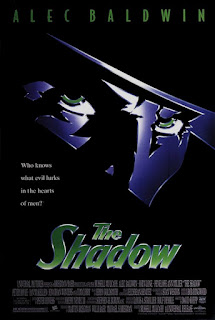
The poster isn't too "on the nose", is it?
What's in a name?
One of the first things people complain about is the fact that he doesn't use his real name. So what? Personally, yes, I'm always for transparency (which is why I shall refer to him as Chris) - but what he does on his blog is his choice and his writings shouldn't be looked at differently because of it. What matters is the content, the blogs and reviews - if they have merit, that's what counts.

What's experience?
I've read comments that go on and on about his experience. Yes, he's no John August with the films to back up what he writes. But look at e.g. Scott Myers - are you following him because he wrote K-9? No - you follow him because he's consistently created and/or curated valuable content over the years. In my opinion, Chris falls in the same category. I've read some of his blogs on screenwriting - and they have merit, period. You may agree or disagree with his points, but here's a guy who's given it a lot of thought and takes the time, for years now, to put pen to paper. So he's no screenwriter, so what? Some of the best teachers and trainers have never excelled themselves at what they teach.

Who's a "nobody"?
Arguments flared recently when Chris had his big moment. When he promoted a script, "The Disciple Program" with a review of his. The script received lots of interest and in the meantime has been bought with director and star (Mark Wahlberg) already attached. Now suddenly people say that the script had already been getting attention and that it would have made its way even without Chris. Ah come on, guys, this is just pretty damn lame envy territory here. Of course Chris deserves some credit here! Like it or not he's cultivated a following over the years (his Twitter account has close to 10'000 followers alone) - if this guy wants to do something, he can do something.

What's uncool?
One of main reasons why Chris has reached his current status is by giving his audience something exclusive - basic marketing, if you will. From the get-go he started reviewing unfinished scripts that were and are floating around Hollywood. There I completely agree with John August and Craig Mazin - that needs to stop. Chris should never, ever, review any draft of any project unless he has the explicit go-ahead by the owner of the script.
Chris adds the following before giving his review of an unfinished script: This is an early draft of the script. The situations, characters, and plot may change significantly by the time the film is released. This is not a definitive statement about the project, but rather an analysis of this unique draft as it pertains to the craft of screenwriting.
Yes, drafts are just that, drafts. By definition unfinished and by experience they're unfinished for any number of reasons. An experienced writer is an experienced collaborator - he knows what it takes - and that means he knows how to play his role well in the best interest of the final product. That means going in stages - often you need an inferior draft to go to the brilliant one. Long story short - Stop that, Chris. Unless you have the explicit okay, stop it, for good.

What's cool?
What's cool is what Chris' popularity can achieve. At this stage he doesn't need to attract followers to his site by publishing reviews of unfinished scripts anymore. The followership is there and now he can focus on making the most of his clout. What he's done with the review for "The Disciple Program" is a great example. That was an amateur script and he helped launch it. What he's also done is start regular reviews of amateur scripts (Amateur Friday) - and he's done a Twitter contest offering amateur to tweet their logline and he'd select his favorites and winners would get reviewed.

Personally, I couldn't care less whether Chris/Carson/Scriptshadow was a tennis instructor or a butcher before starting his blog. What I care about is that he very clearly has a passion for it. What I care about is the stamina he's shown over time. Not unlike Scott Myers he adds real value to the virtual screenwriting world. Does he deserve some credit? Abso-friggin-lutely.